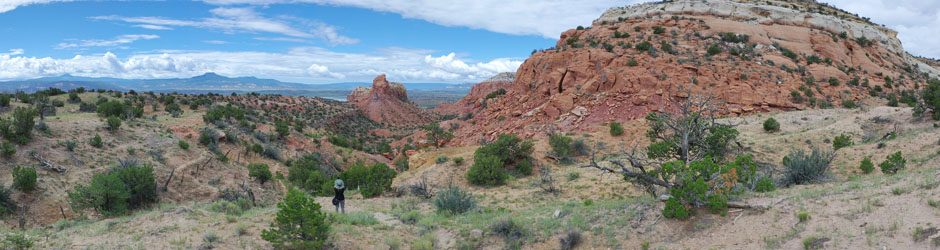

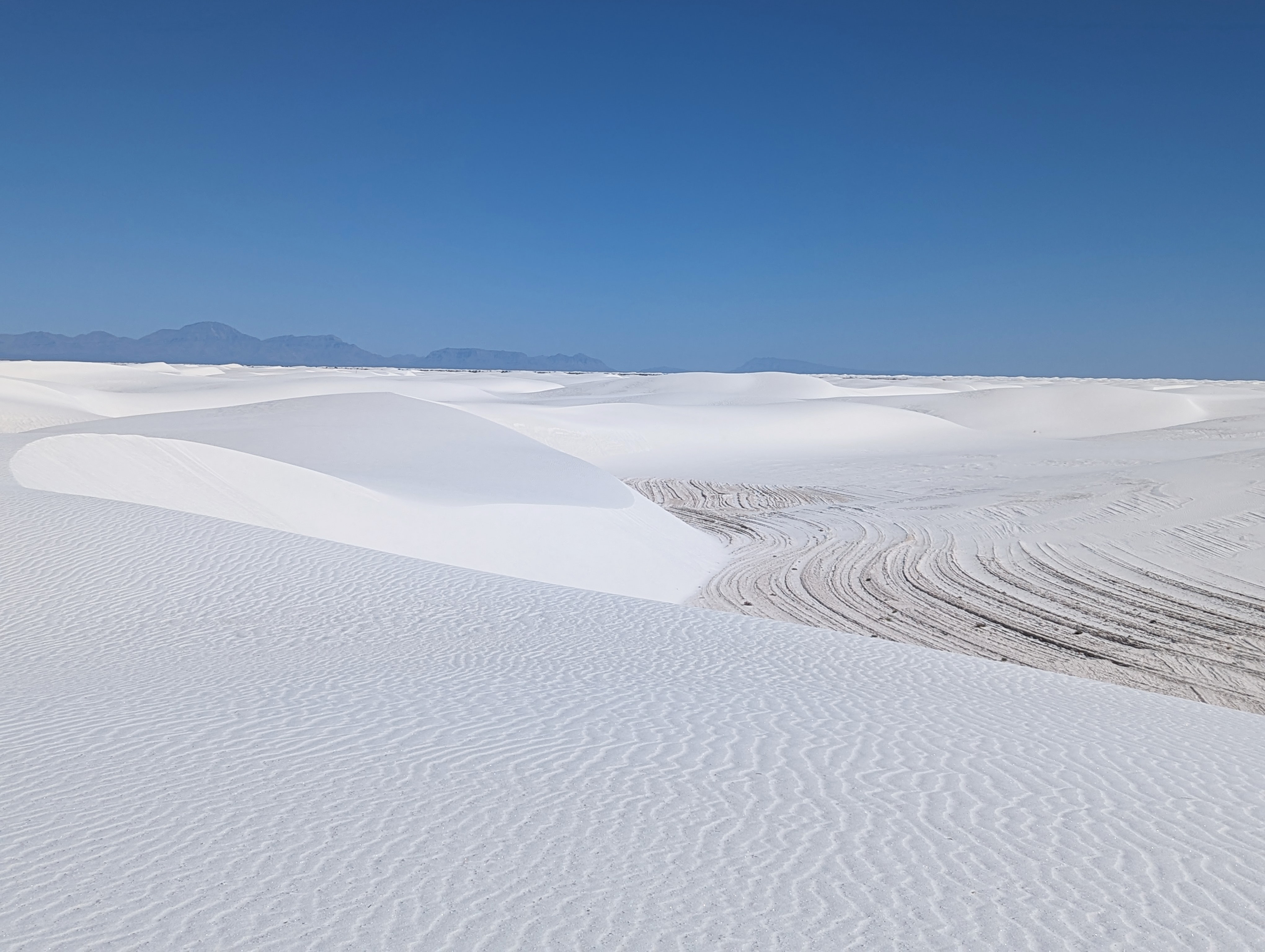
It’s that time of year when Joe and I come out of hibernation to spend our free days finding new adventures in New Mexico. We decided to travel down south with our first stop being White Sands National Park. Our day at White Sands was one of the most memorable days ever. Located in the Tularosa Basin lies the world’s largest gypsum dunes. Over millions of years wind and water have eroded the gypsum into fine grains of sand. You will find soft pillowy sand dunes as well as hard packed areas. There are sculptures formed around hearty vegetation that grows here. What I especially loved was the swirly patterns in the sand created by the wind. The path is marked by footprints and markers along the way to keep you on trail. When you arrive at one marker you will see another marker in the distance so you know which direction to follow. Walking through soft sand is not easy. Always take enough water as there are no water stations to refill except at the visitor center which is several miles away. Wear light colored clothing and use sunscreen as the temperature can feel much warmer than the actual temperature. Make sure you are prepared to walk in sand, it is a slow trek and difficult to climb the numerous dunes with one step forward while sliding a half step back. But hiking down hills are so much fun, Joe and I held hands and ran down the dunes like little kids. Every step down would sink up to our knees filling our shoes with sand, but it was a small price to pay. I wish everyone could experience White Sands at least once, the stark beauty will take your breath away. I know that Joe and I are already planning our next trip to White Sands where you can’t feel anything other than awe and wonder!
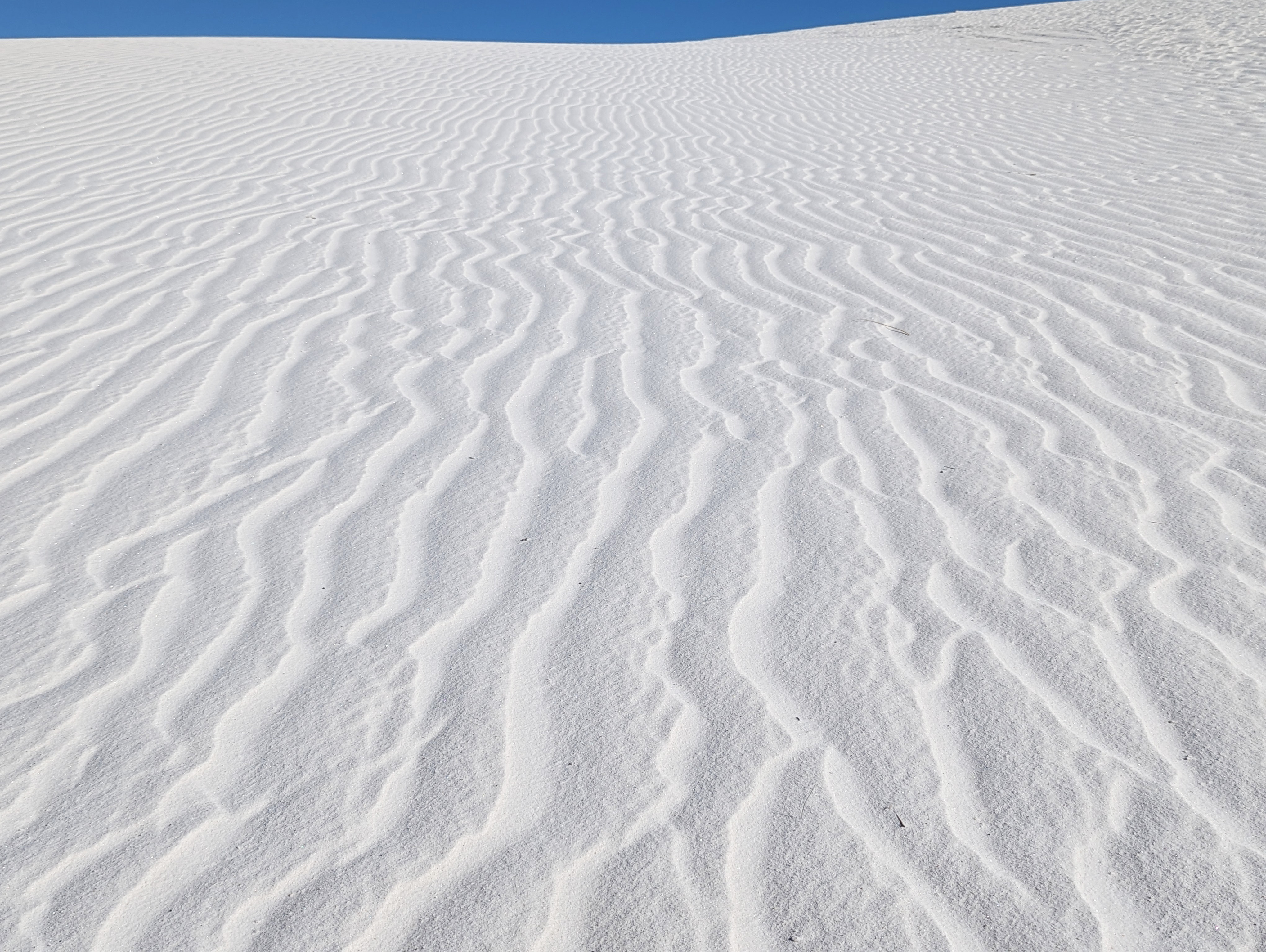
You will find many areas where the wind makes these wavy lines in the sand. It’s so beautiful with just white sands and blue skies. There were very little clouds in the sky on this day and there were varying shades of blue skies all around us.
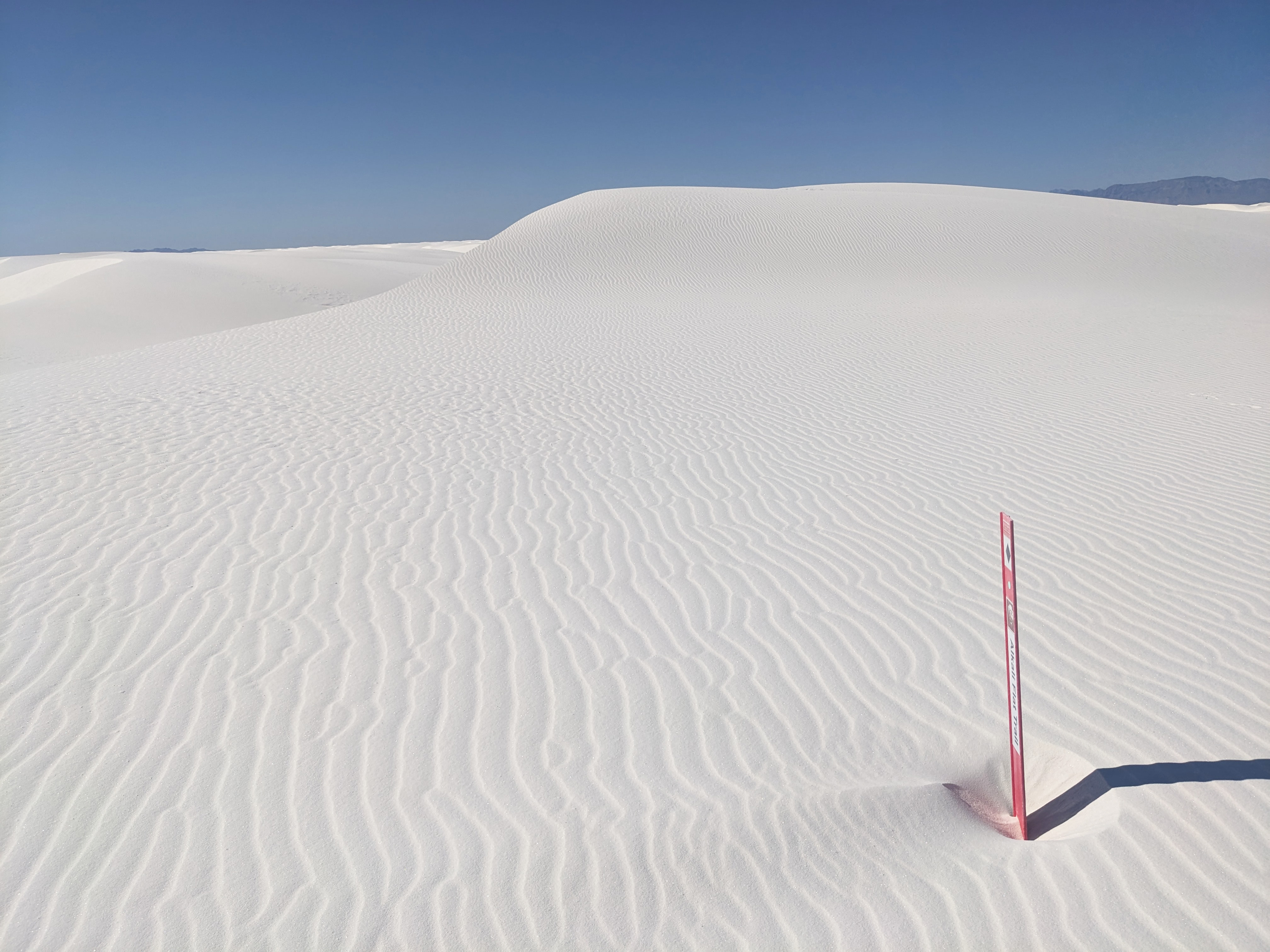
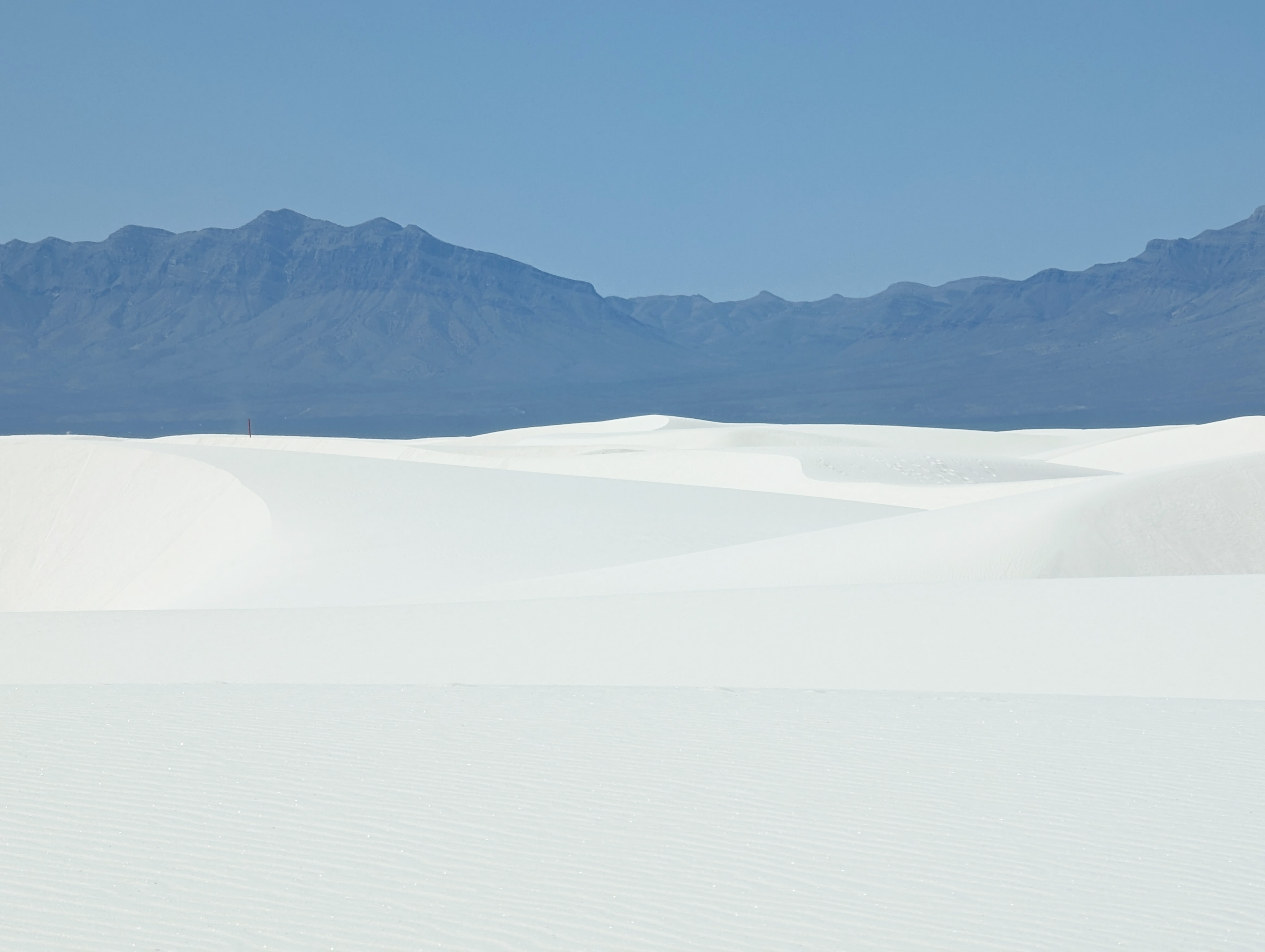
These are the trail markers along the way. We would see the next one in the distance and follow the footprints of the earlier hikers.

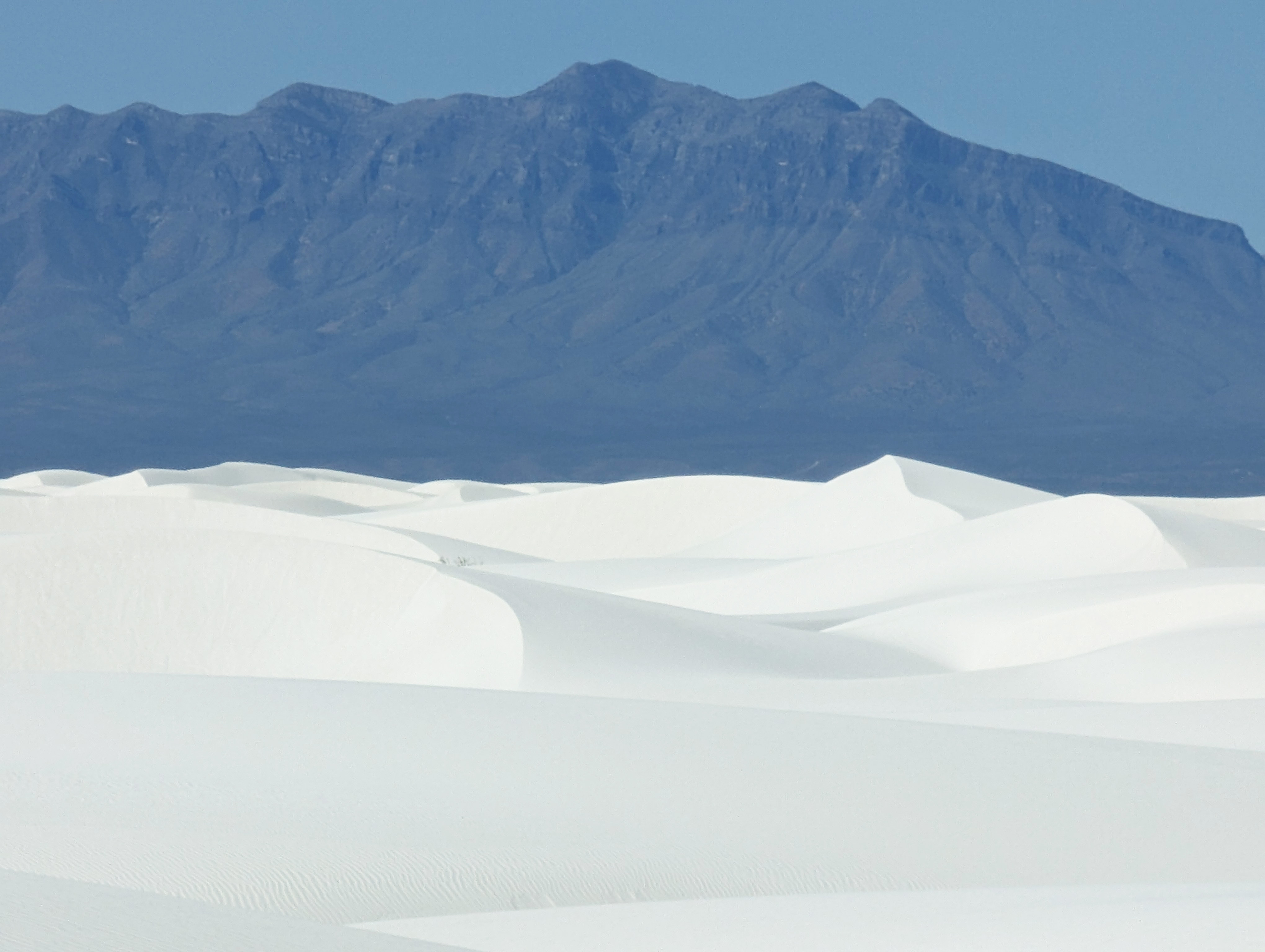
As we walk west you can see the San Andres Mountains in the distance.

Here are some of the highlights along the way.


This is a Skunkbush Sumac that despite the elements has survived and looks to be thriving. Wind and rain have created a beautiful sculpture around it.


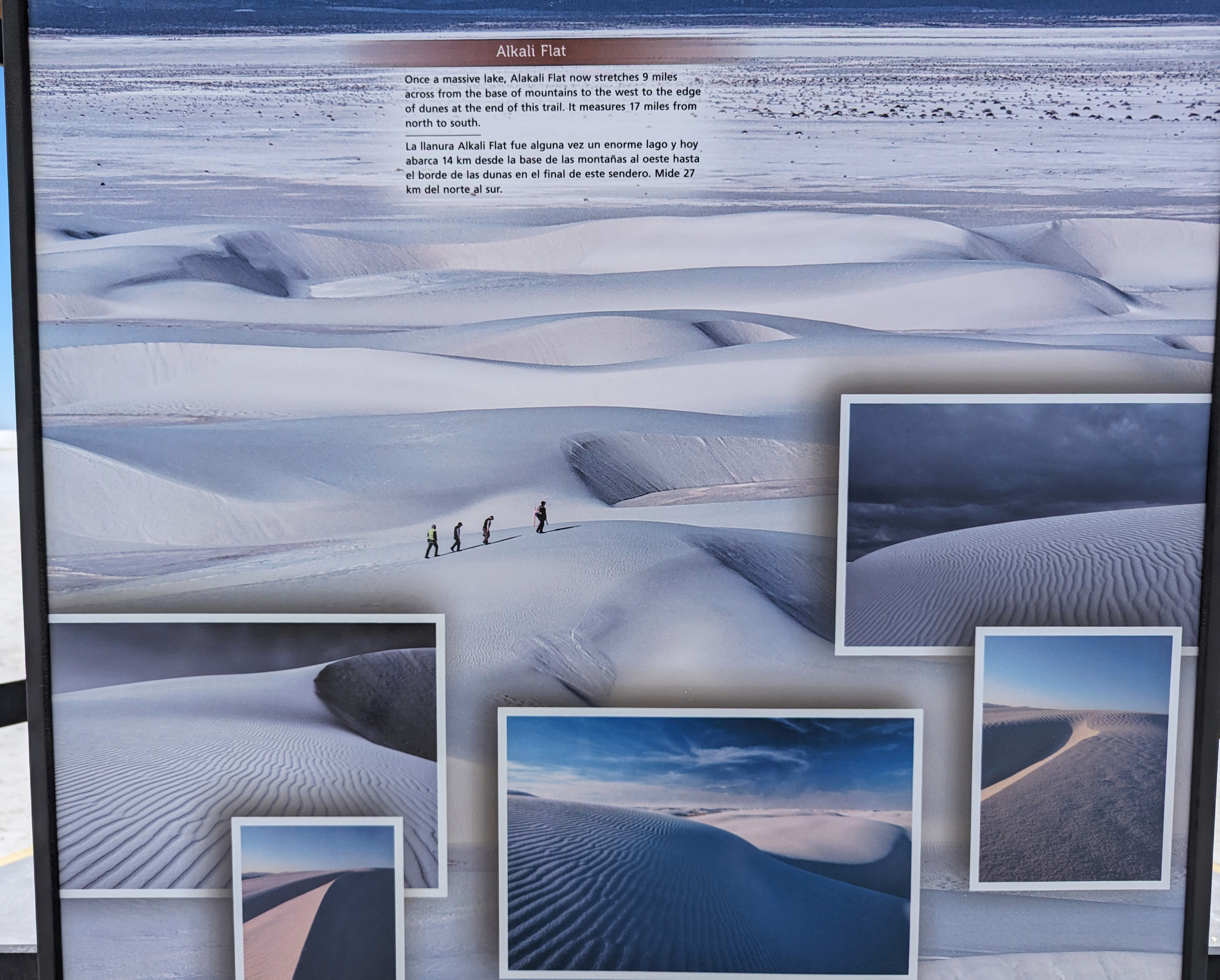
According to the map this area is at the edge of the “Flat”. This is where the trail turns to make the loop back.

In 1941 the northern part of the Tularosa Basin was designated as the White Sands Missile Range. Part of that area lies the Trinity Site where the first Atomic Bomb was tested in 1945. You should check the website before you travel to White Sands as it is sometimes closed for missile testing.

On the “Flat” we found where ants had made a den near this bush. You can see all the dark pebbles they carried and dropped to surround their underground den. I have a new appreciation for the ants who have adapted and survive here.

We are on the loop back but as we got back into the dunes, I would always look back toward the San Andres Mountains.

The wind started out breezy but became stronger as we walked back back toward the parking area. You can see the start of a whirlwind in the distance.
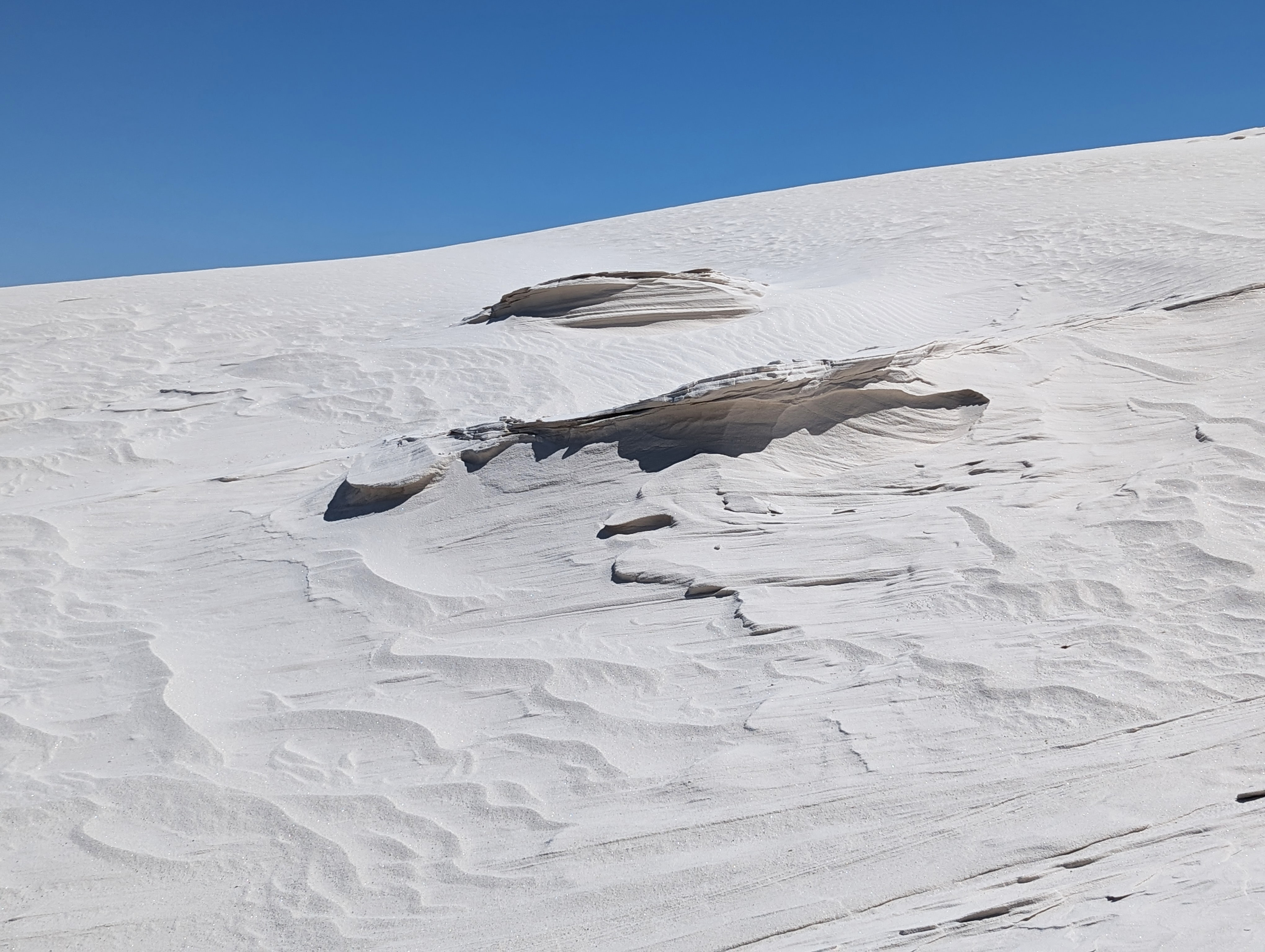


Here are some of the hard packed areas where sculptures were just above the surface. We also found a Sand Verbena plant. It was beautiful seeing some color in this white landscape.
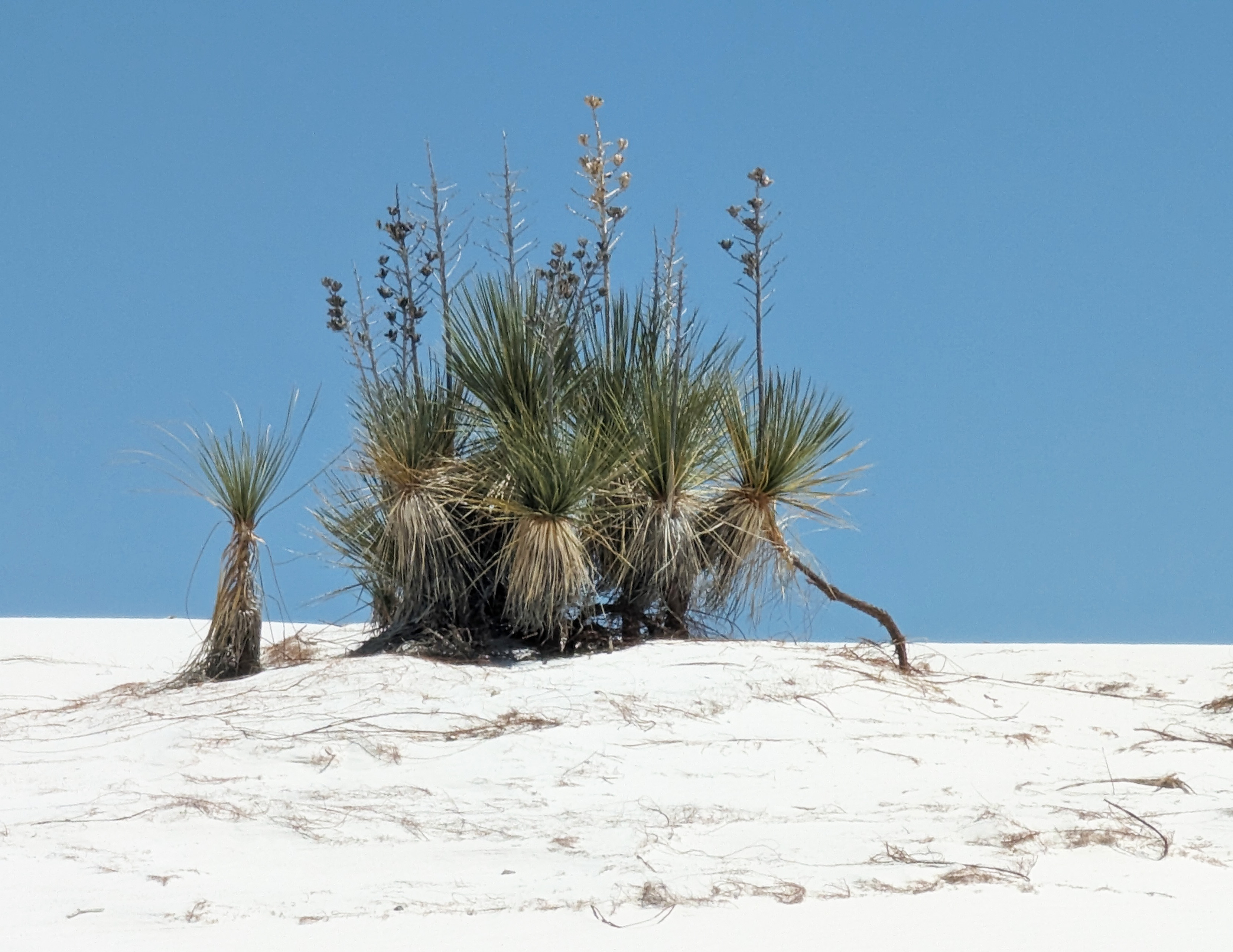
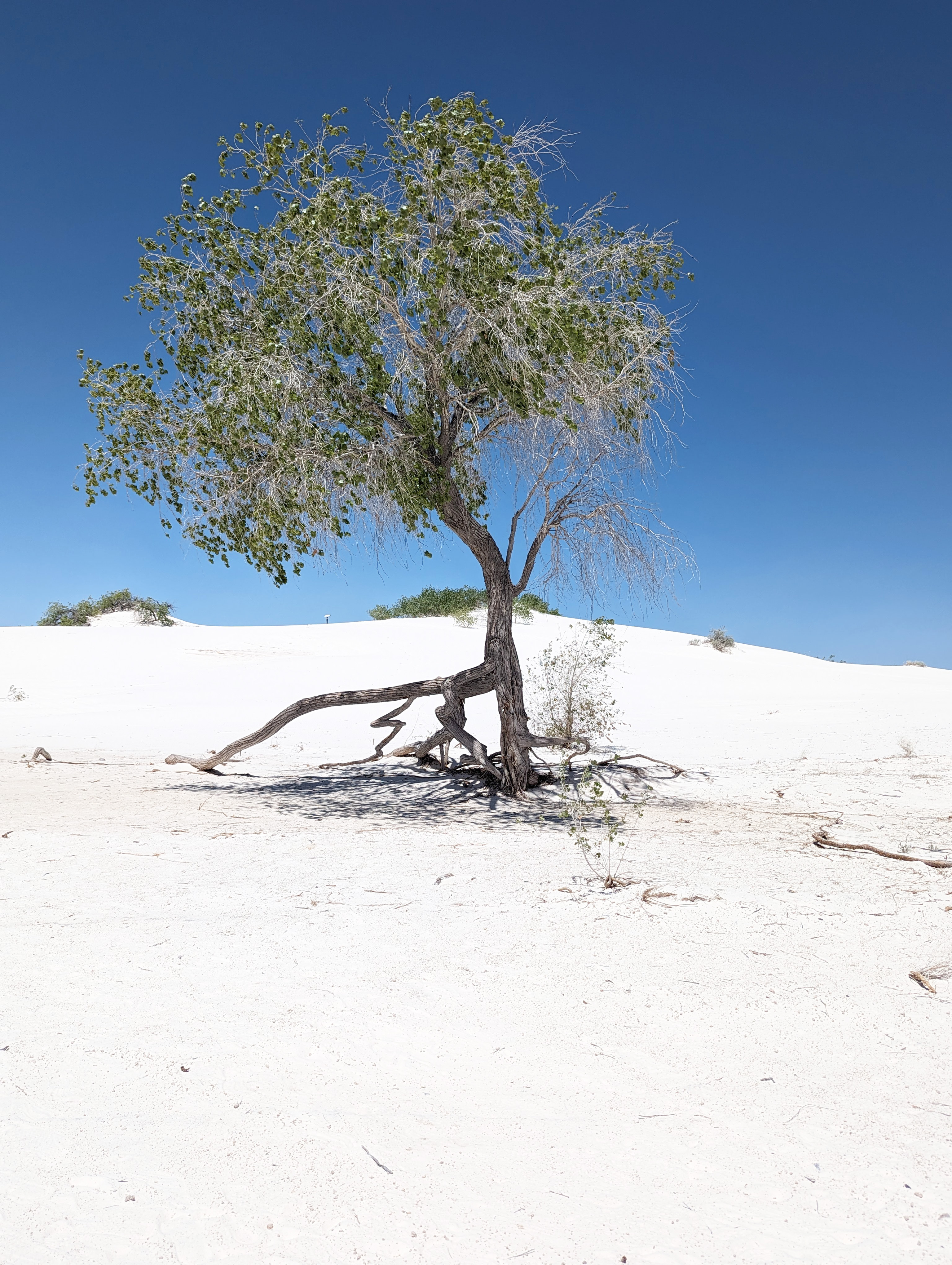


After we finished the Alkali Flat Trail we hiked the Dune Life Nature Trail which is an approximate 1 mile loop. This area highlights some of the vegetation that grows in the park. Here are a few of the plant life we came across on the trail.
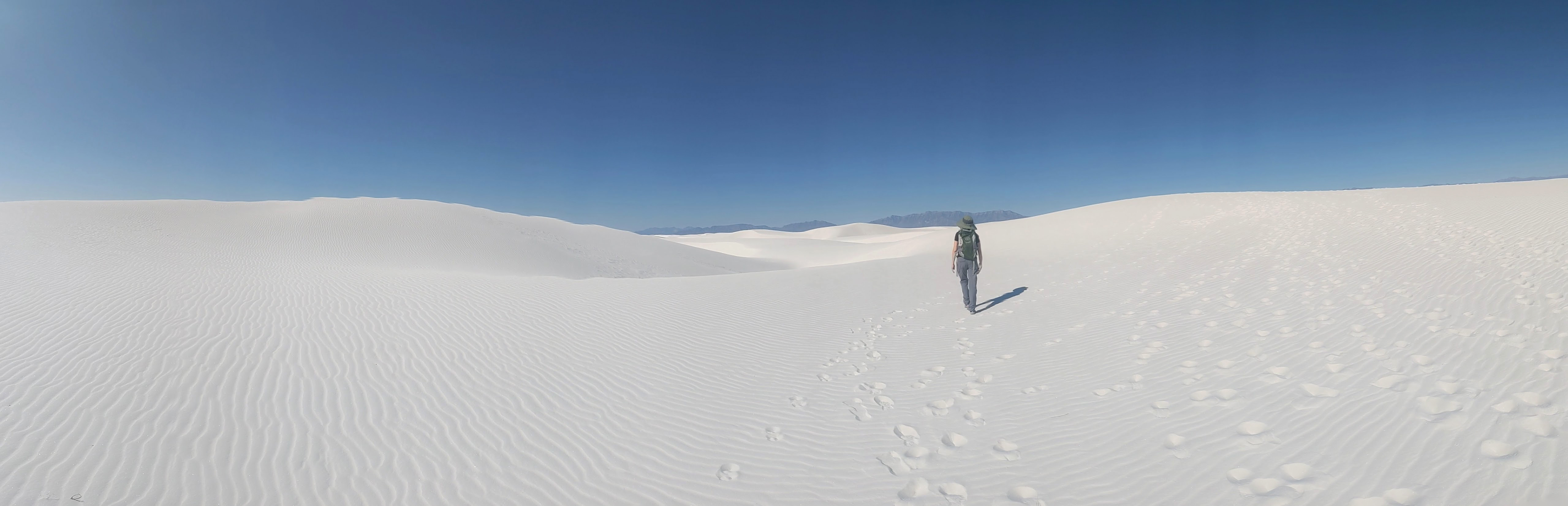
I hope you enjoyed tagging along with us at White Sands National Park.





4 thoughts on “White Sands National Park”
Dorothy's New Vintage Kitchen
How marvelous!
LikeLiked by 1 person
NativeNM
It is awe inspiring for sure!
LikeLike
Karen
Love the photo of the dunes with the San Andres Mountains in the distance. Mother Nature is a real artist.
LikeLike
NativeNM
I was happy my photos captured the mountains, sky and sand together. They do make a beautiful landscape!
LikeLiked by 1 person