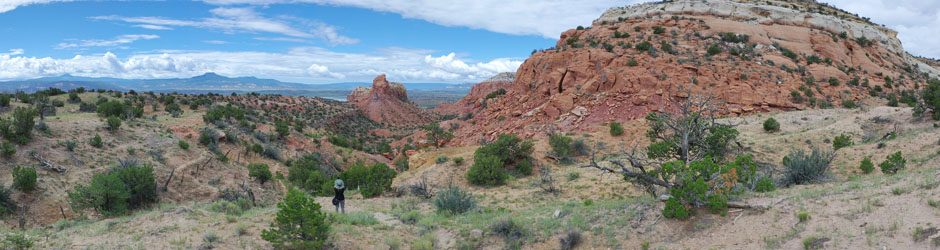
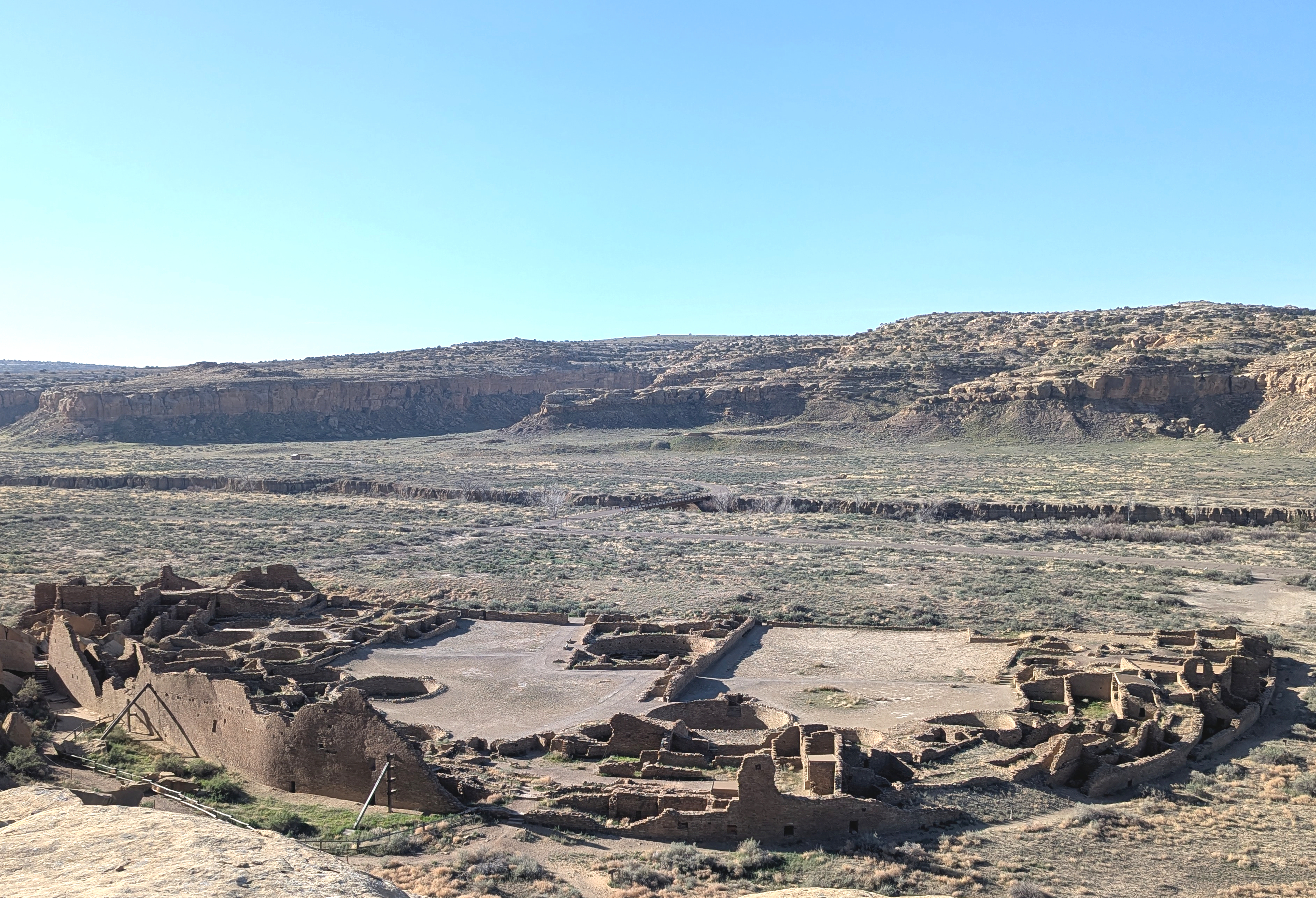
Chaco Canyon located in the Four Corners area of New Mexico is the remains of an ancient civilization that began in the mid 800’s. Over the next 300 years, ancestral Puebloans aka Anasazi constructed several communities including single story and multi story stone buildings using techniques that were unique for the times. Every construction was like a community, some having hundreds of rooms. The architecture alone is amazing, oriented to solar, lunar and cardinal directions. By the early 1100’s, Chaco Canyon was a ceremonial and economic hub. It was considered a central place binding regional tribes together for ceremonial get togethers as well as trade. By the late 1100’s the Chacoans shifted in focus to other regional areas such as Aztec, Mesa Verde and beyond. There is evidence that water once flowed through the arroyo near Pueblo del Arroyo which may indicate that climate change could also be a factor why they dispersed to other areas. It’s amazing to see these villages that were built so long ago still standing and here for all of us to witness. Within Chaco Canyon there are many communities with ruins spread out across the canyon. Some are built with such sophistication it makes one wonder how they gained the knowledge to design and construct such precise curved walls, round kivas and multiple stories of rooms. Where did they learn the masonry techniques which still stand today? Chaco has been on my bucket list for the longest time. Our first visit was in May of 2021 touring the many ruins, walking within the walls learning the history and getting goosebumps just thinking about it. Now we’ve returned a year later to hike along the Pueblo Alto trail which overlooks the canyon to get a birds eye view of the ruins below as well as the landscape of the canyon. The architecture is stunning and takes you back in time wondering how they did it.
Update: We visited Chaco Canyon on 3/29/26; I took some additional pictures and have updated this post. The news of today is that the Indigenous Leaders and New Mexico Political leaders are trying to stop the current federal administration from reversing an order to ban all oil and gas developments within 10 miles of the Chaco site. The decision may come within the next 7 days in which the public can come together to make their case to save Chaco. I have made my comments known on the matter and hope that a lot of other people will do so as well. It would be a disgrace to the history and culture of this sacred site if the ban is overturned.
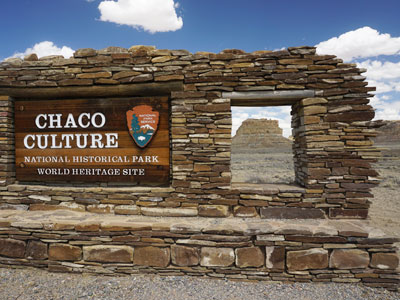
There are two roads that lead to Chaco Canyon. Here are the directions how to get there from the South or the Northeast. Both routes are on rough dirt roads approximately 20+ miles that require a lot of patience. We have a 4 wheel drive but drove at a slow pace on average 25 mph. Once you are within the park the road is paved with a visitor center where you will need to pay a fee of $15 per person or $25 per vehicle. We have National Park Pass which is also accepted. There are restroom facilities as well as a gift shop on site.
Pueblo Bonito
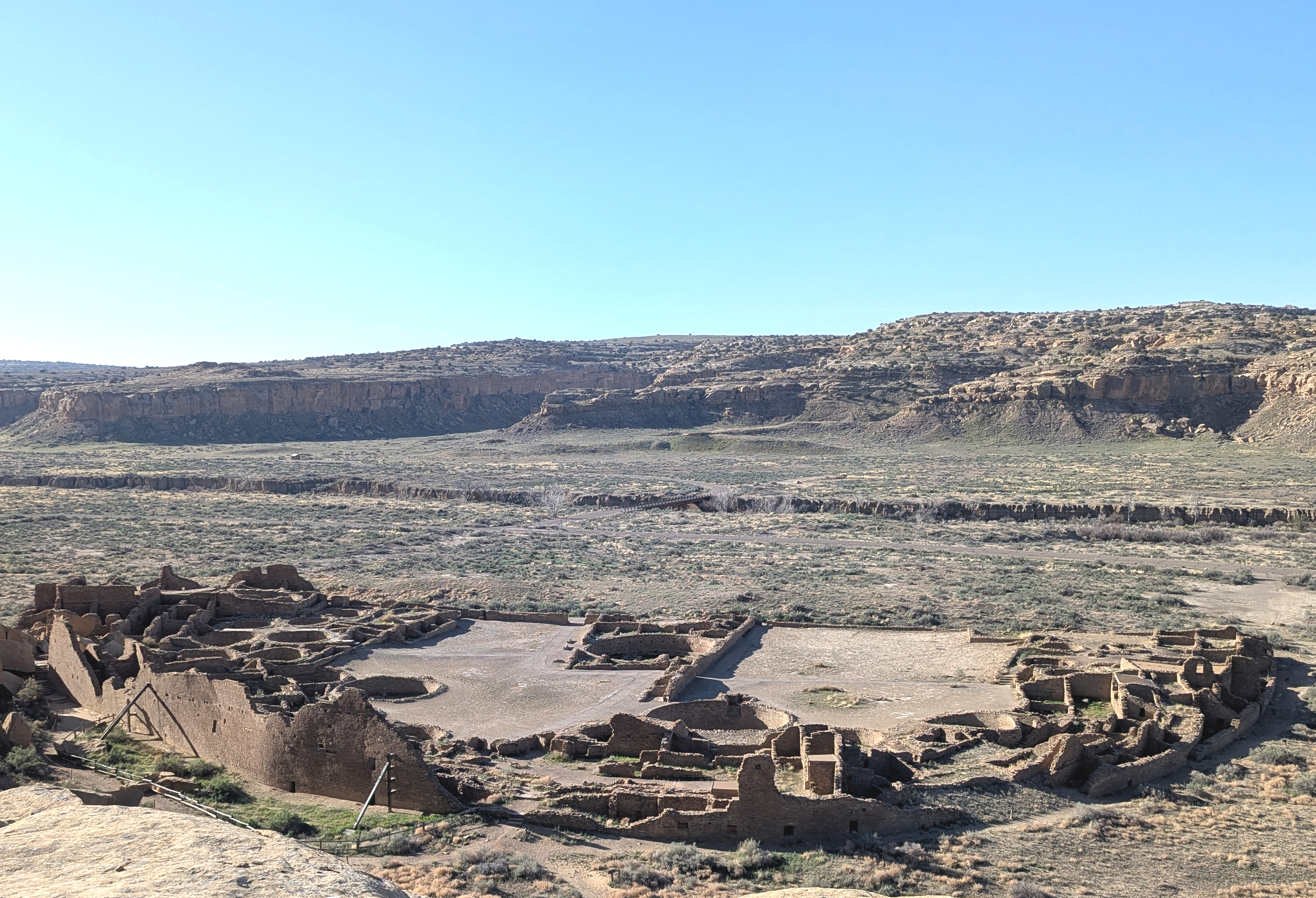
The most popular and largest “great house” is Pueblo Bonito. Pueblo Bonito is believed to have had at least 4 stories with over 600 rooms and 40 kivas. This is the view from the mesa above along the Pueblo Alto Trail. This trail goes along the mesa overlooking the ruins below. If you take the loop it goes back to the Pueblo Alto ruins. The trail is listed at approximately 5 miles but with taking detours and many many pictures we walked 6 miles along this route. Make sure to have plenty of water, a hat and good hiking shoes.
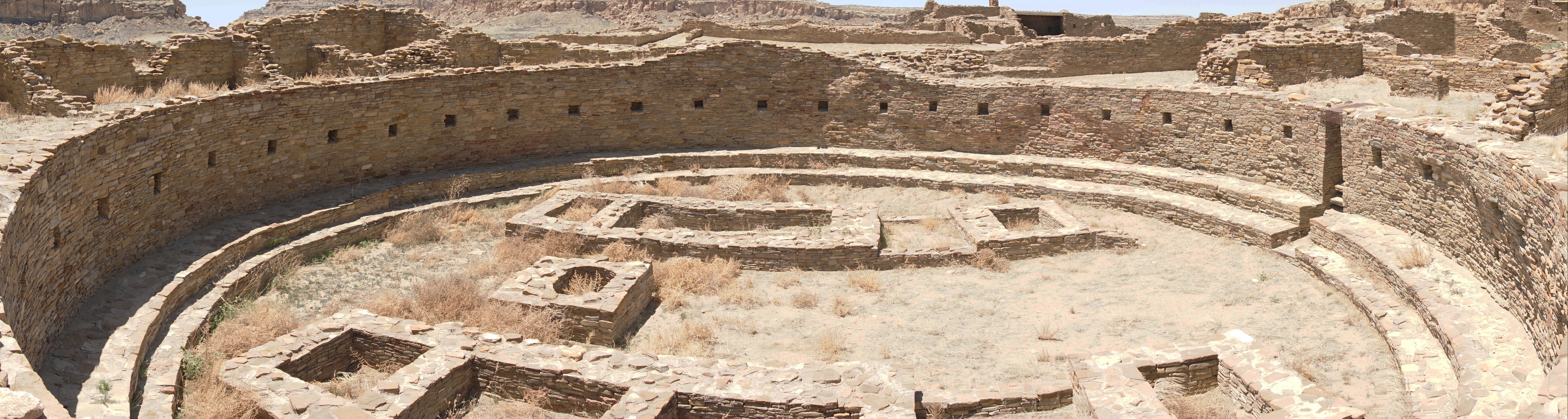
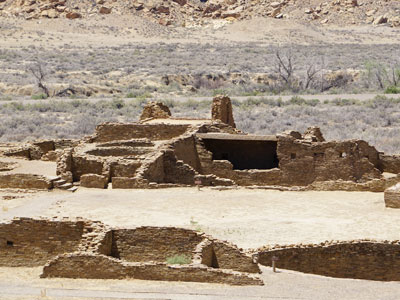
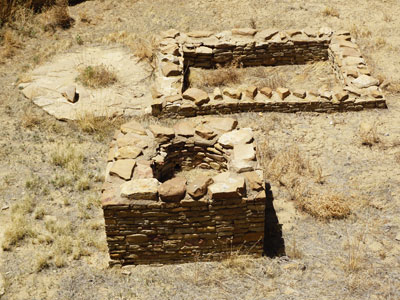
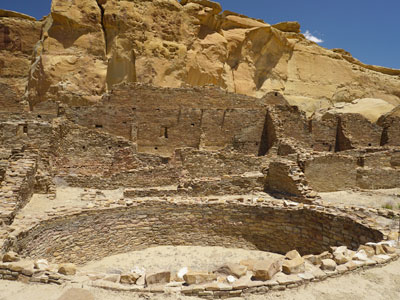
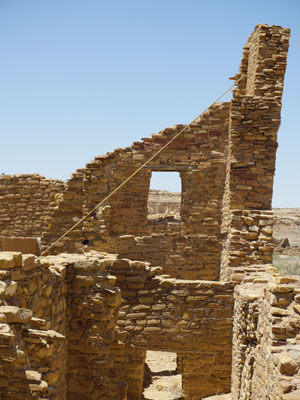
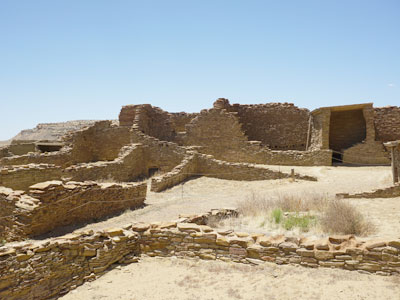
The top picture is a look inside the big kiva within Pueblo Bonito along with other rooms and architecture from the ground view.
Chetro Ketl
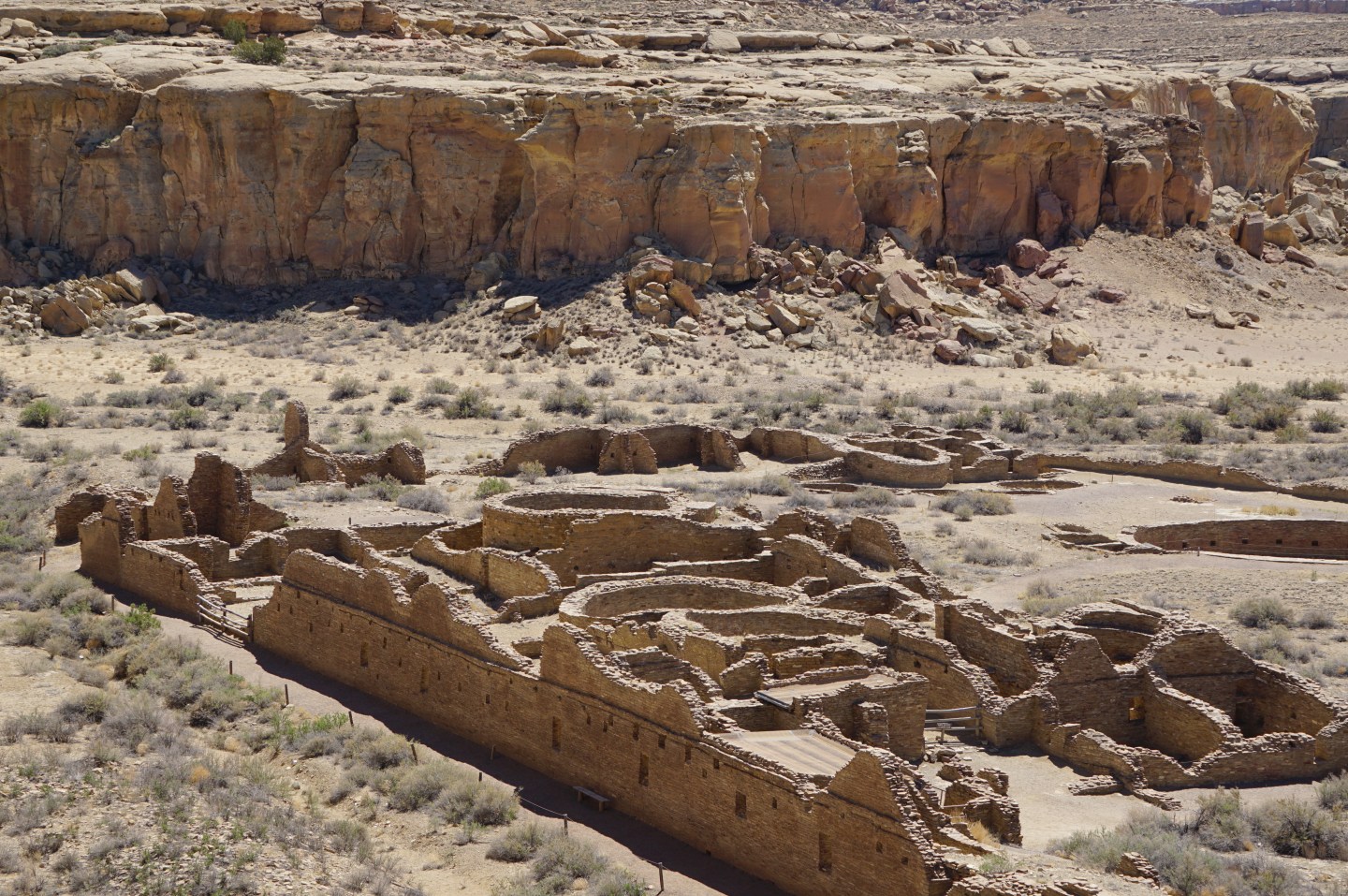
From above on the Pueblo Alto Trail you can see Chetro Ketl from all angles.
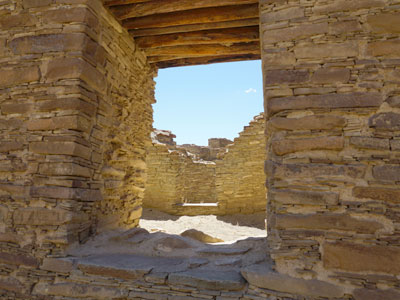
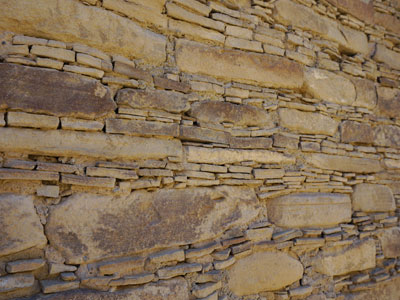
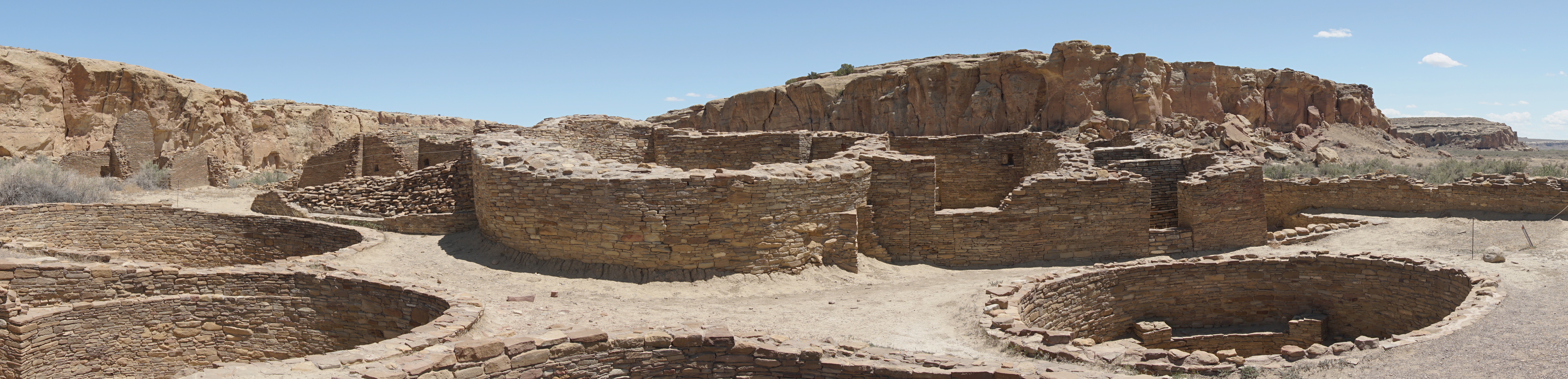
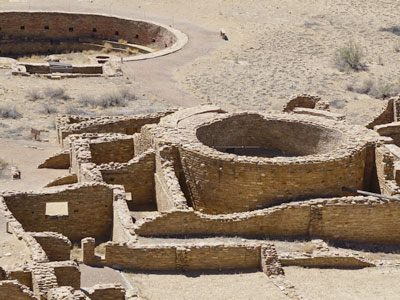
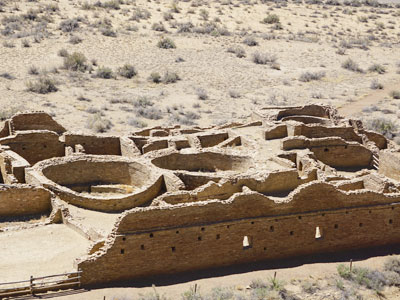
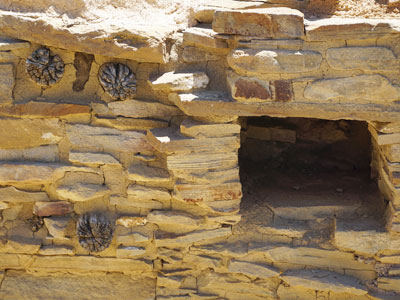
Chetro Ketl is one of the large great houses located farther east in the canyon. A close-up of how the bricks were laid shows the advanced architecture of the ancestral Puebloans.
Pueblo del Arroyo
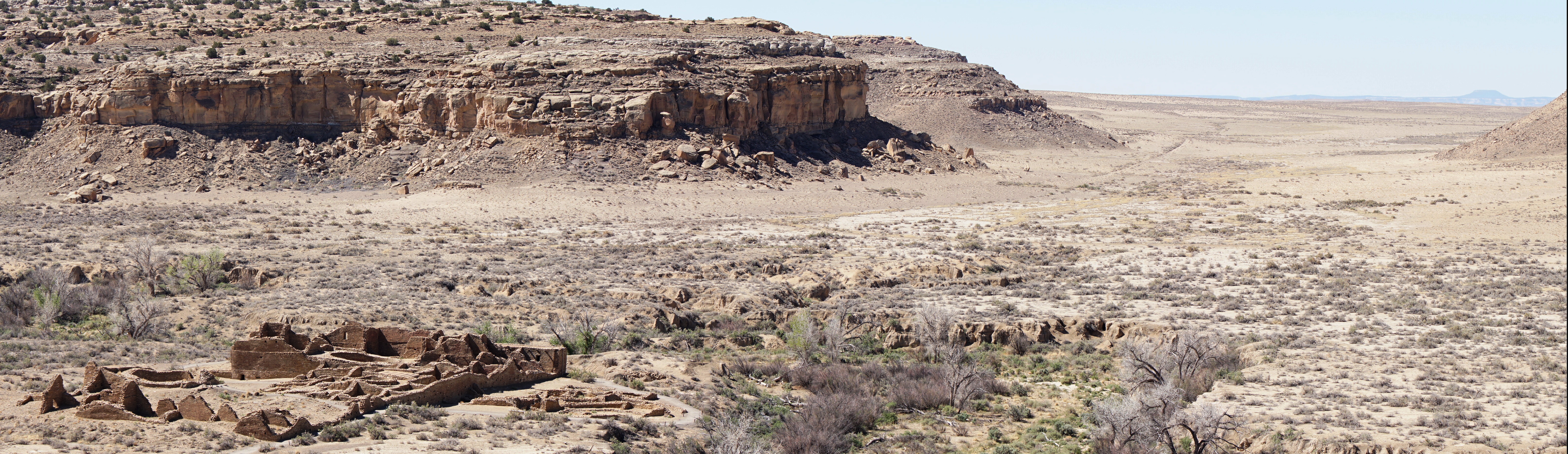
Pueblo del Arroyo ruins are not located up against the mesas like Pueblo Bonita and Chetro Ketl. Instead they were built near an arroyo where water was most likely plentiful at the time. Now just a dry creek, it’s hard to see anything thriving in this desert canyon.
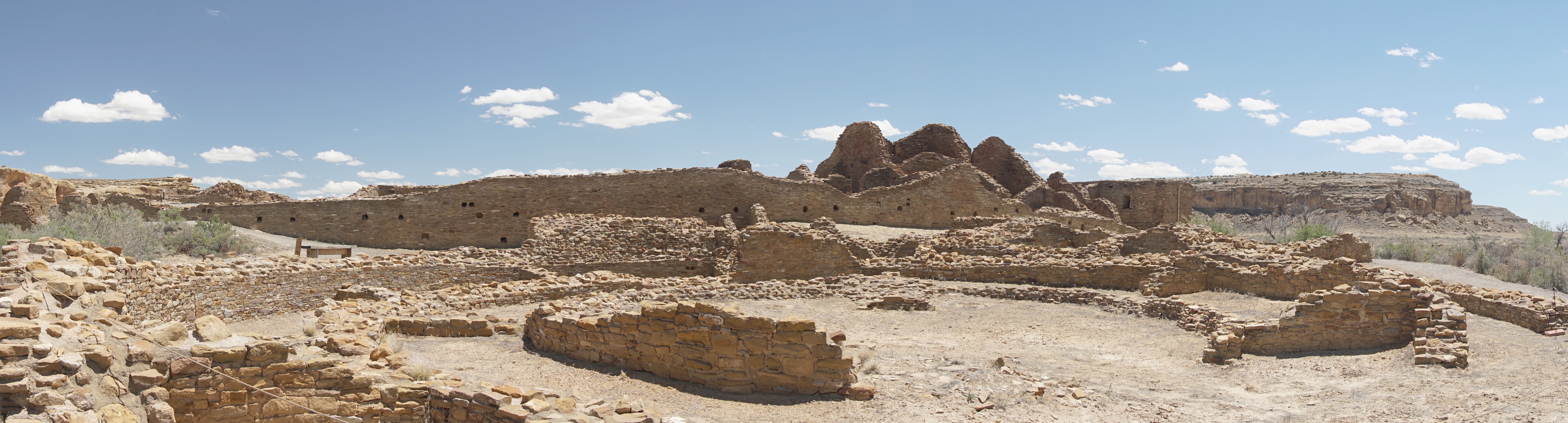
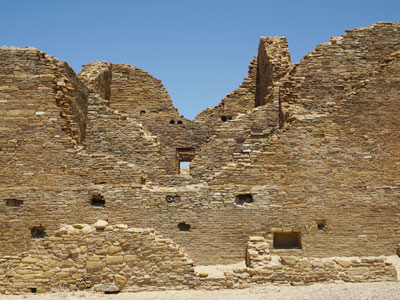
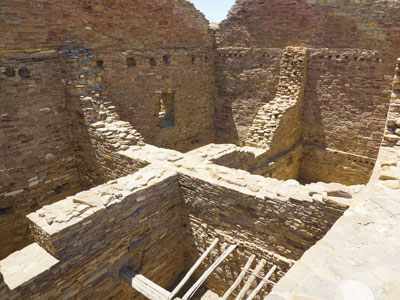
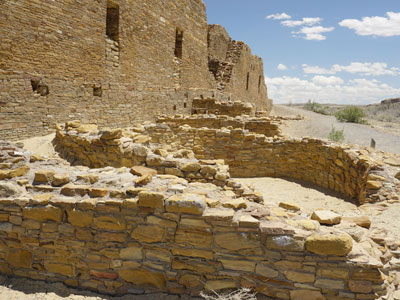
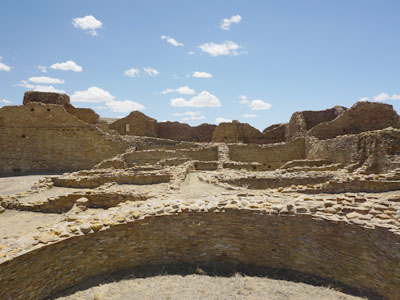
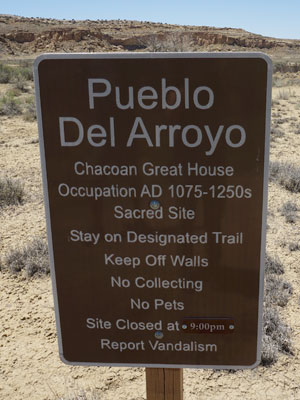
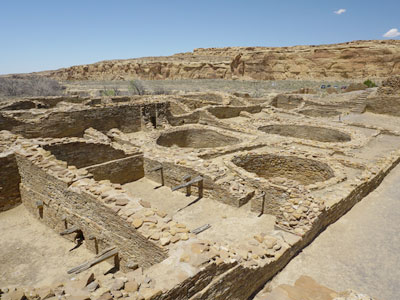
Pueblo del Arroyo is estimated to have been built around 1075, one of the the later constructed great houses.
Casa Rinconada
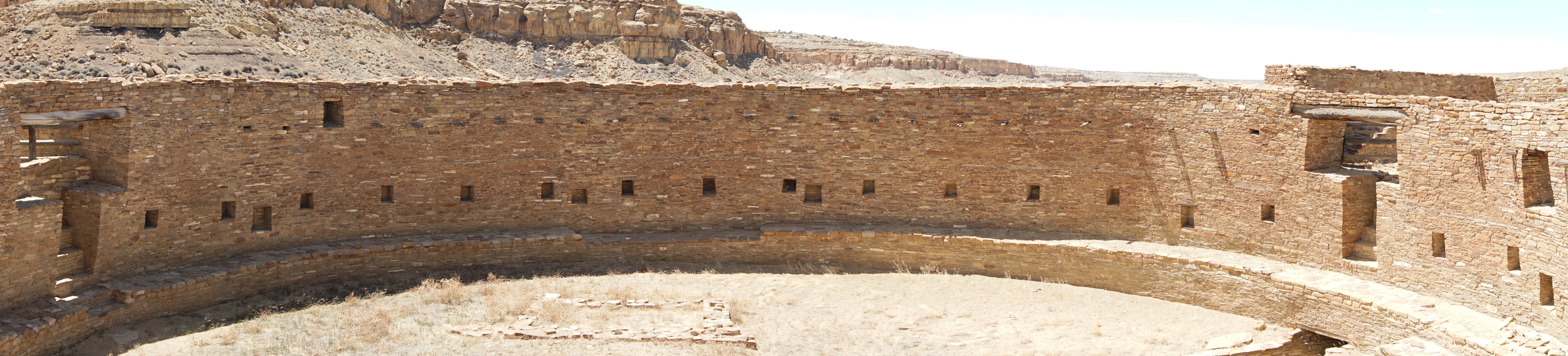
There’s not a whole lot that remains of Casa Rinconada with the exception of this great kiva which is the largest excavated kiva in the canyon. Located on the south side of the canyon, you will most likely drive rather than walk to this site. We decided to stop and check it out on our way out of the park. The trail leads to a “small house” ruin, seemingly a lower class than that of Pueblo Bonito or Ketro Chetl.
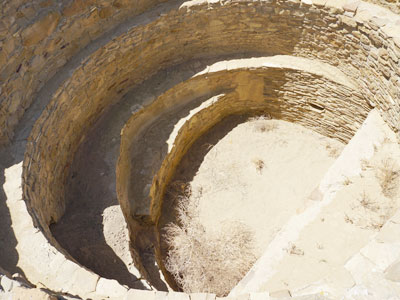
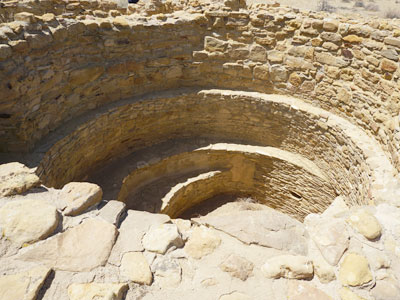
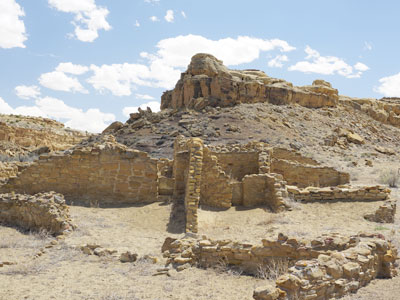
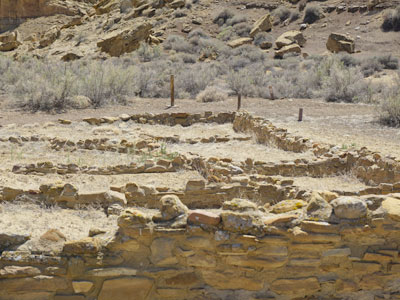
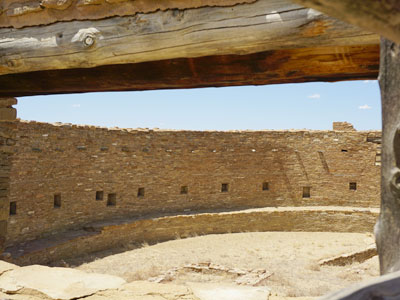
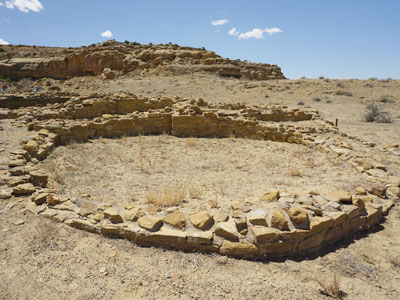
This is what remains of Casa Rinconada
Kin Kletso
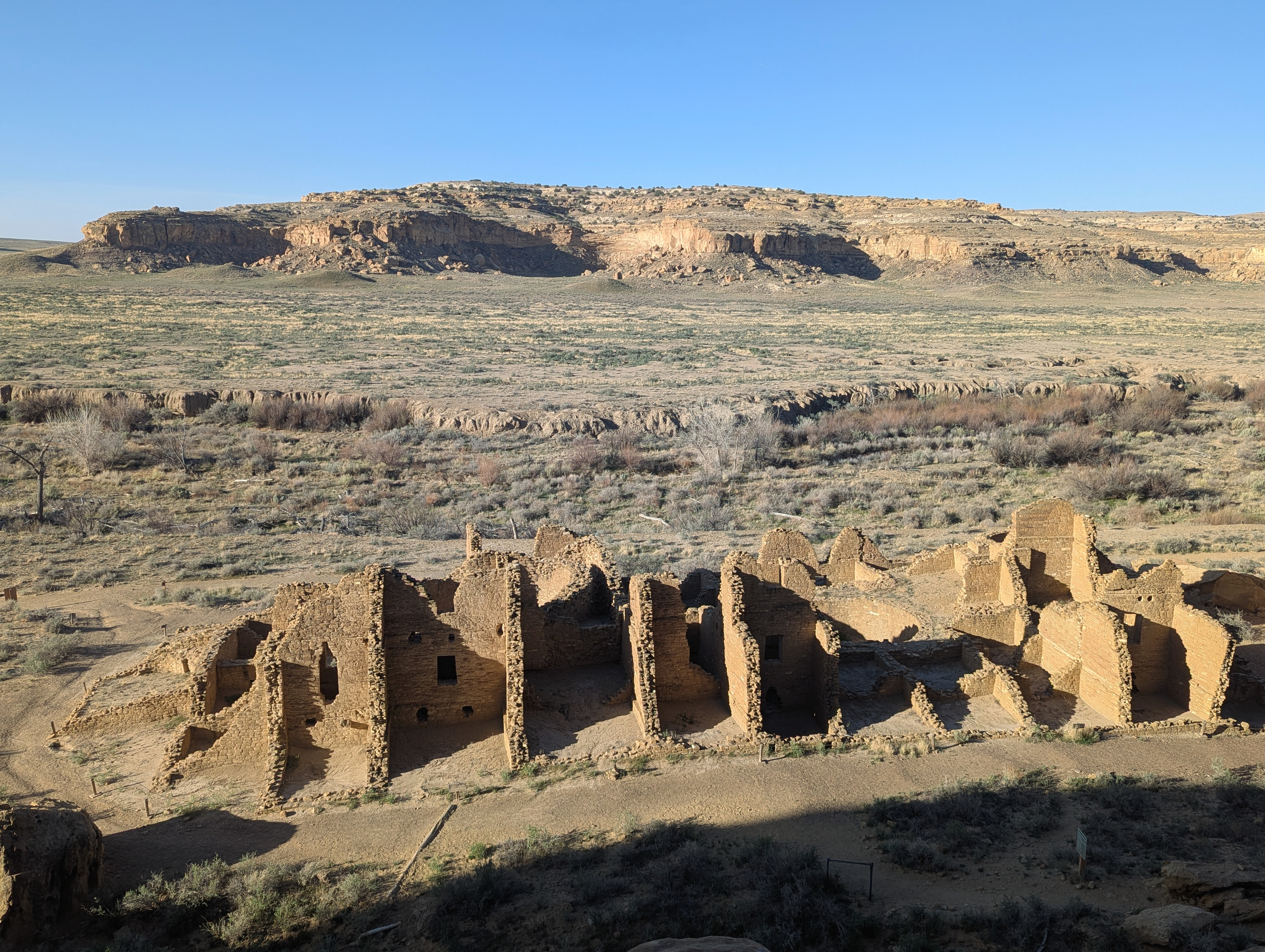
The Pueblo Alto trail starts behind the Kin Kletso ruins which is a smaller construction. As we begin our descent up the mesa we have a nice view of Kin Kletso.
Pueblo Alto Trail
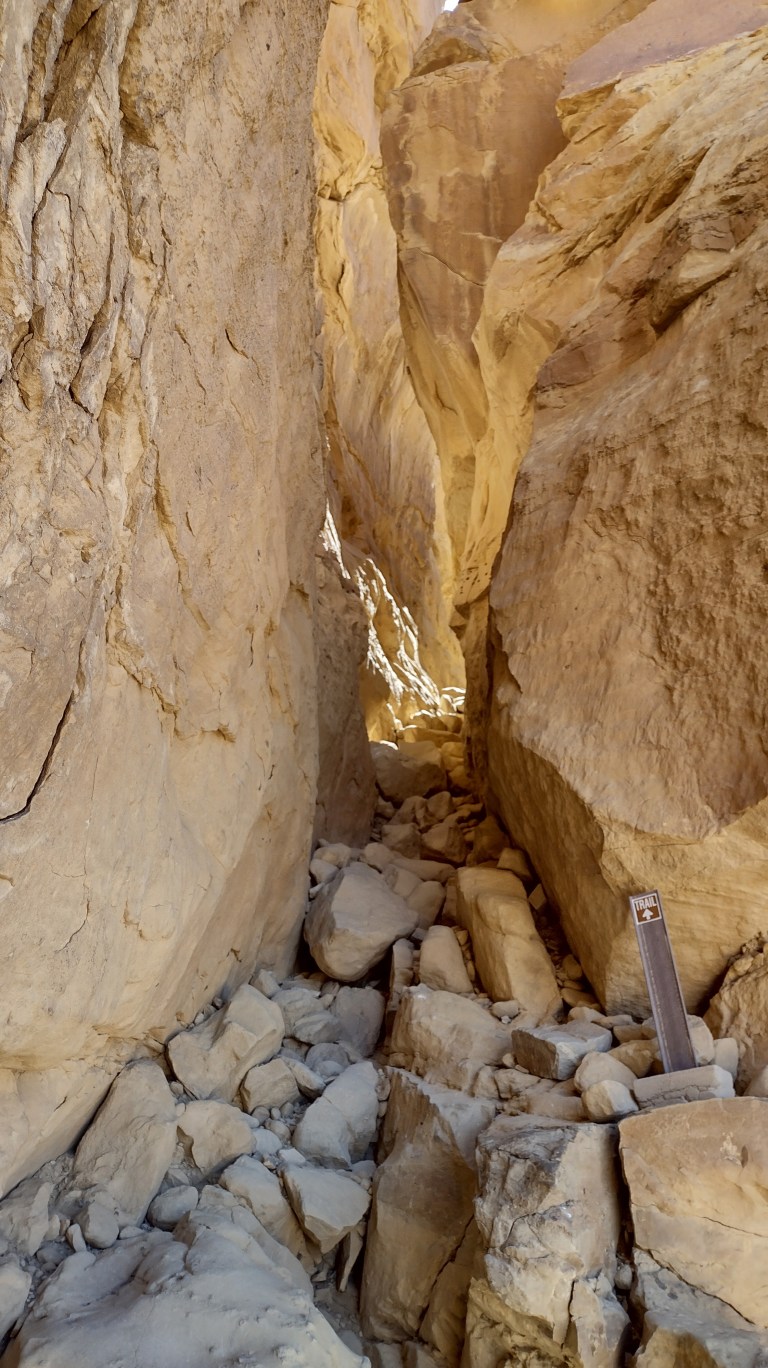
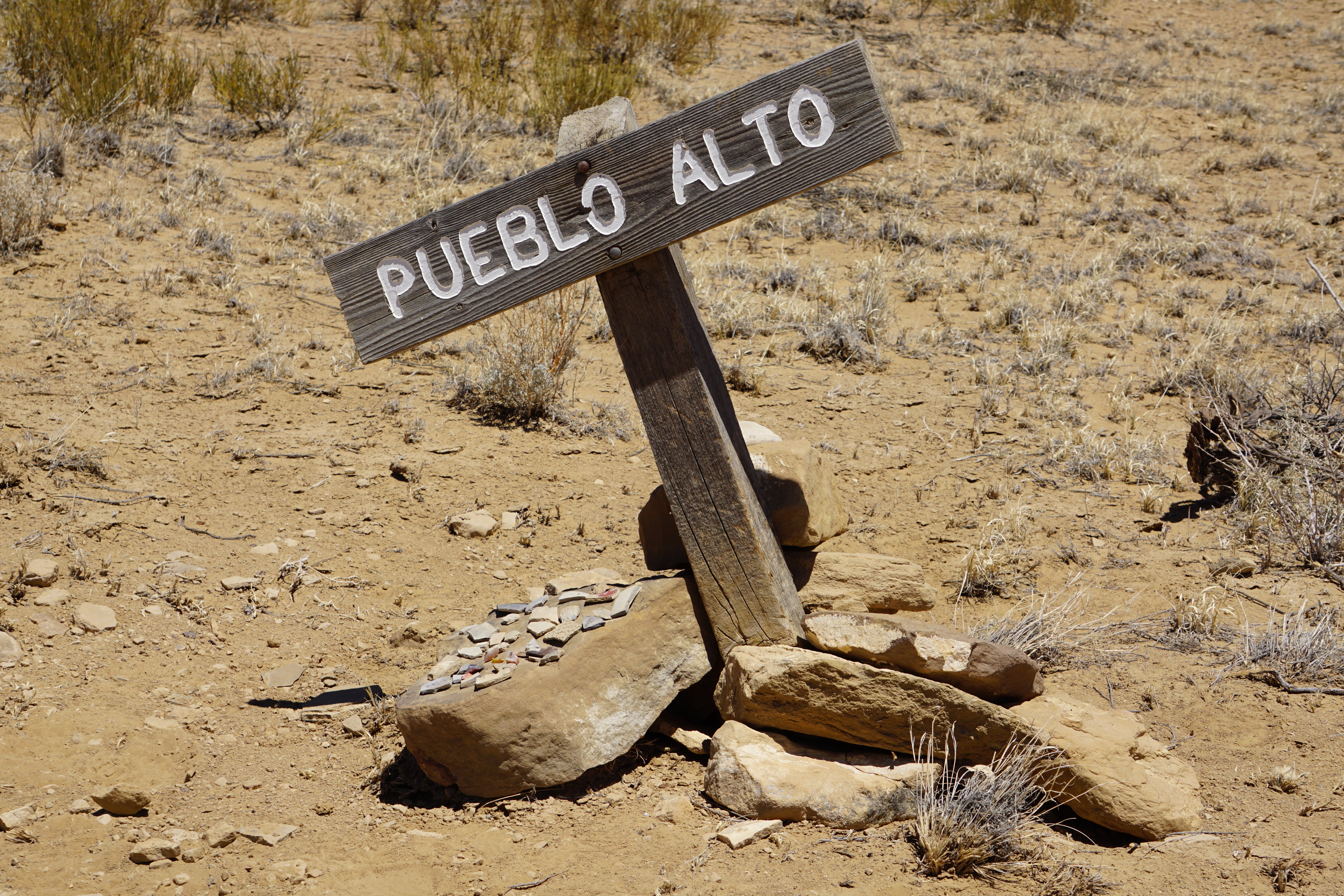
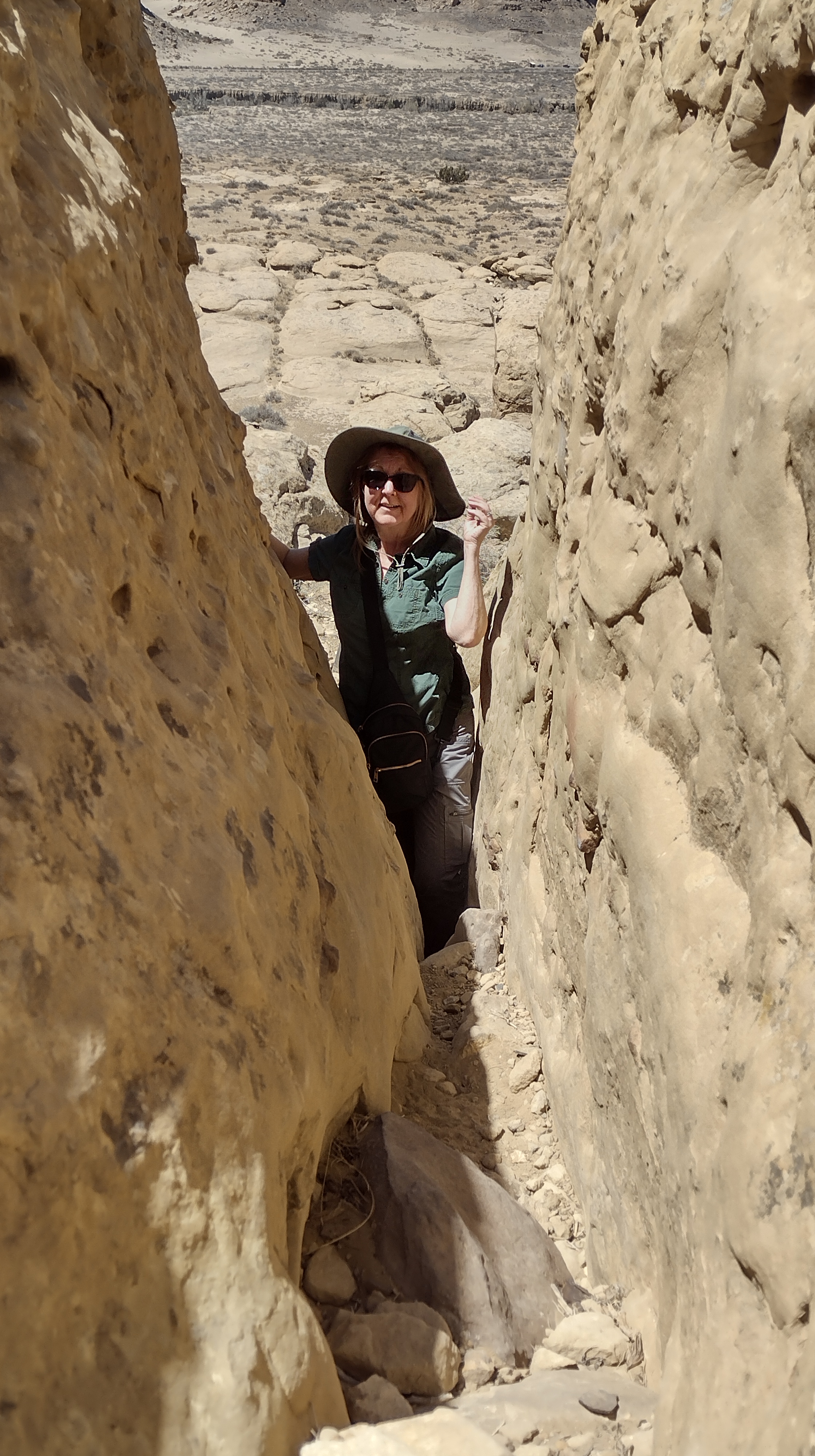
The trail marker has us navigate our way through this narrow crack in the rock. Cameron would be proud that his Mom can still scramble up the rocks to the top of a mesa! You need both hands so tuck your camera away once you start or it might get damaged it in this tight space.
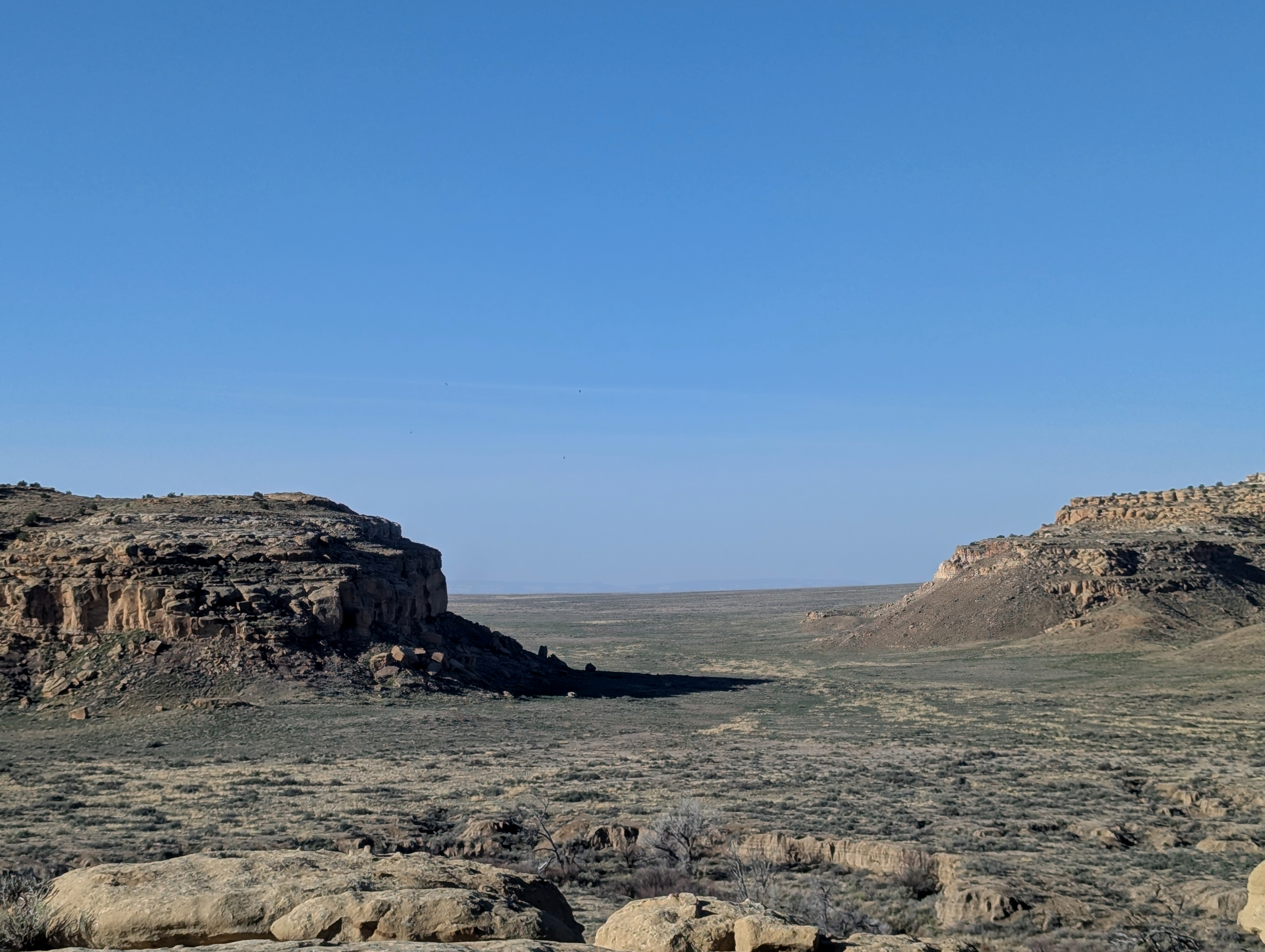
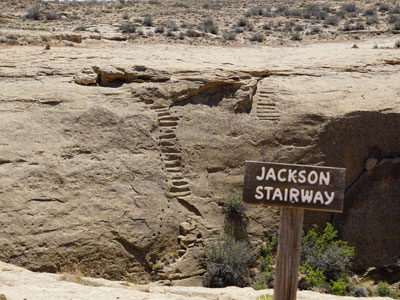
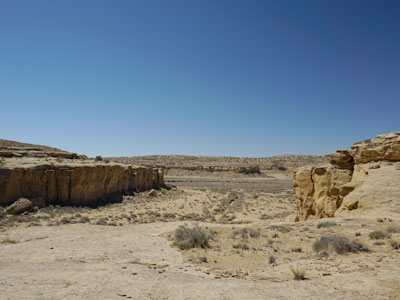
Here are some of the sights from above as we hiked the Pueblo Alto Trail.
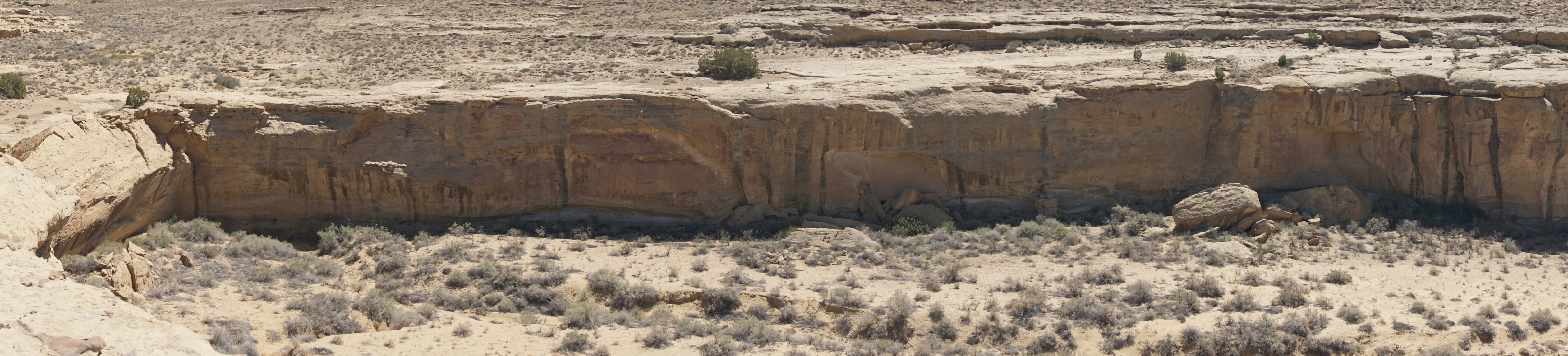
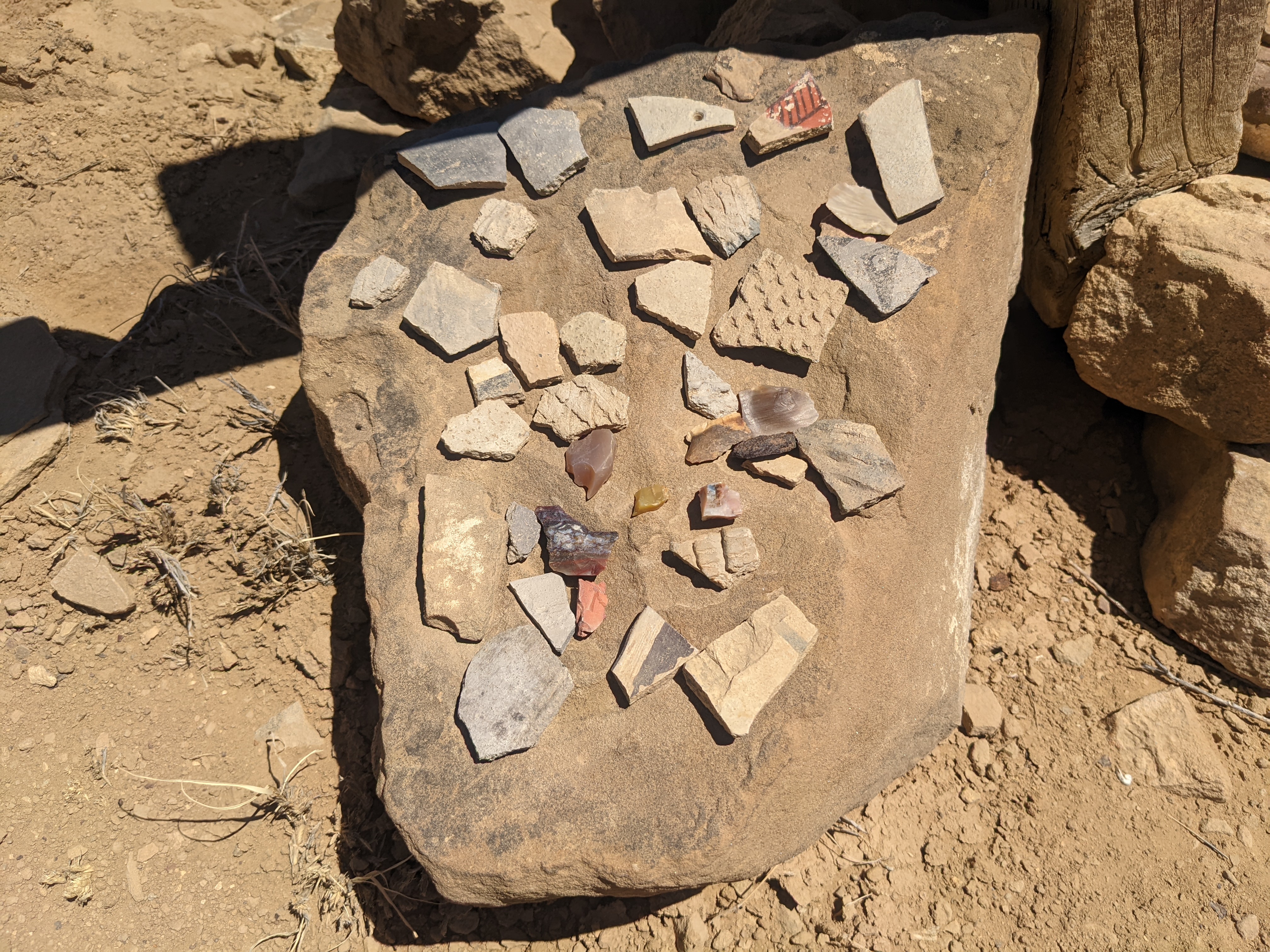
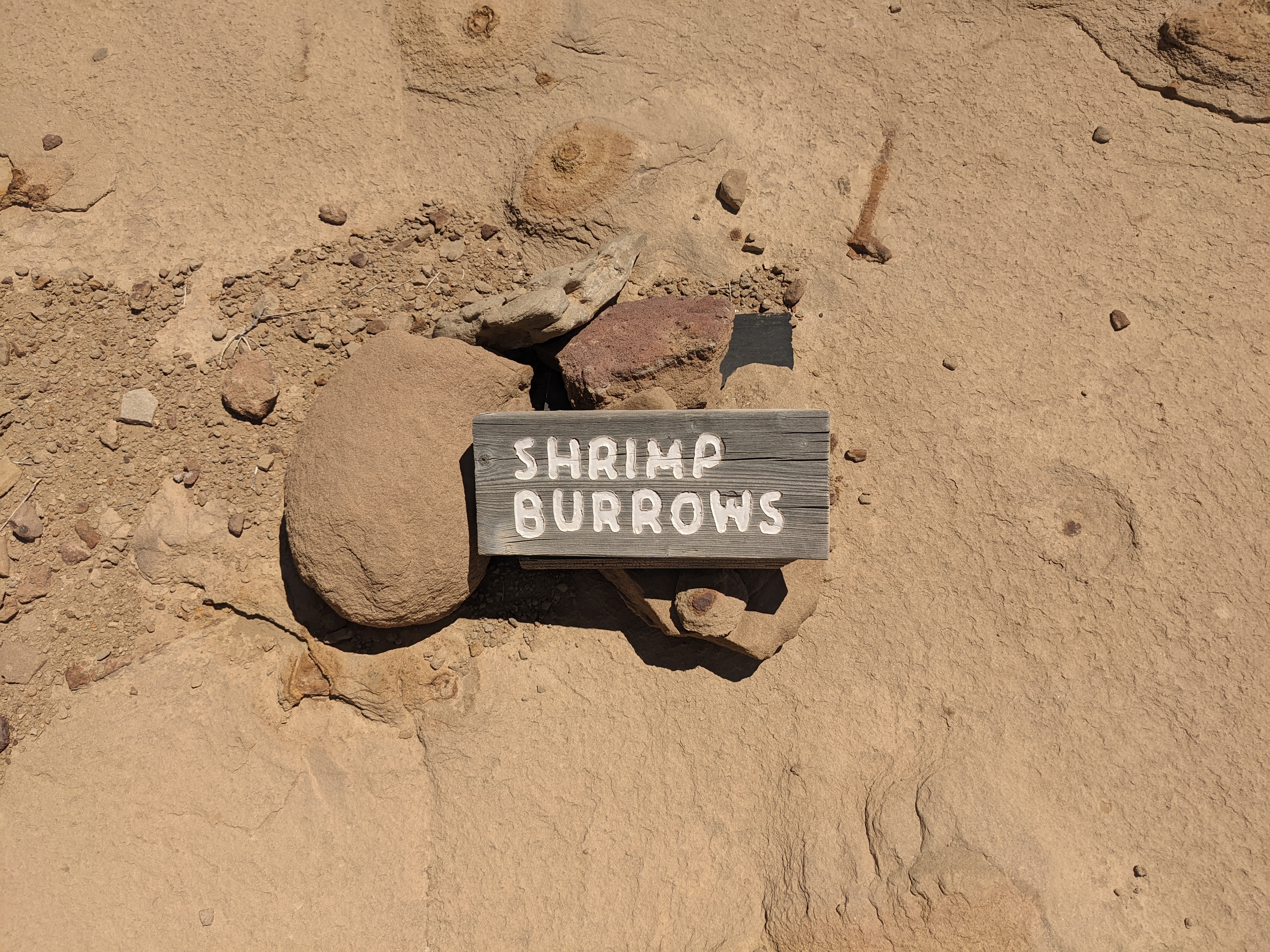
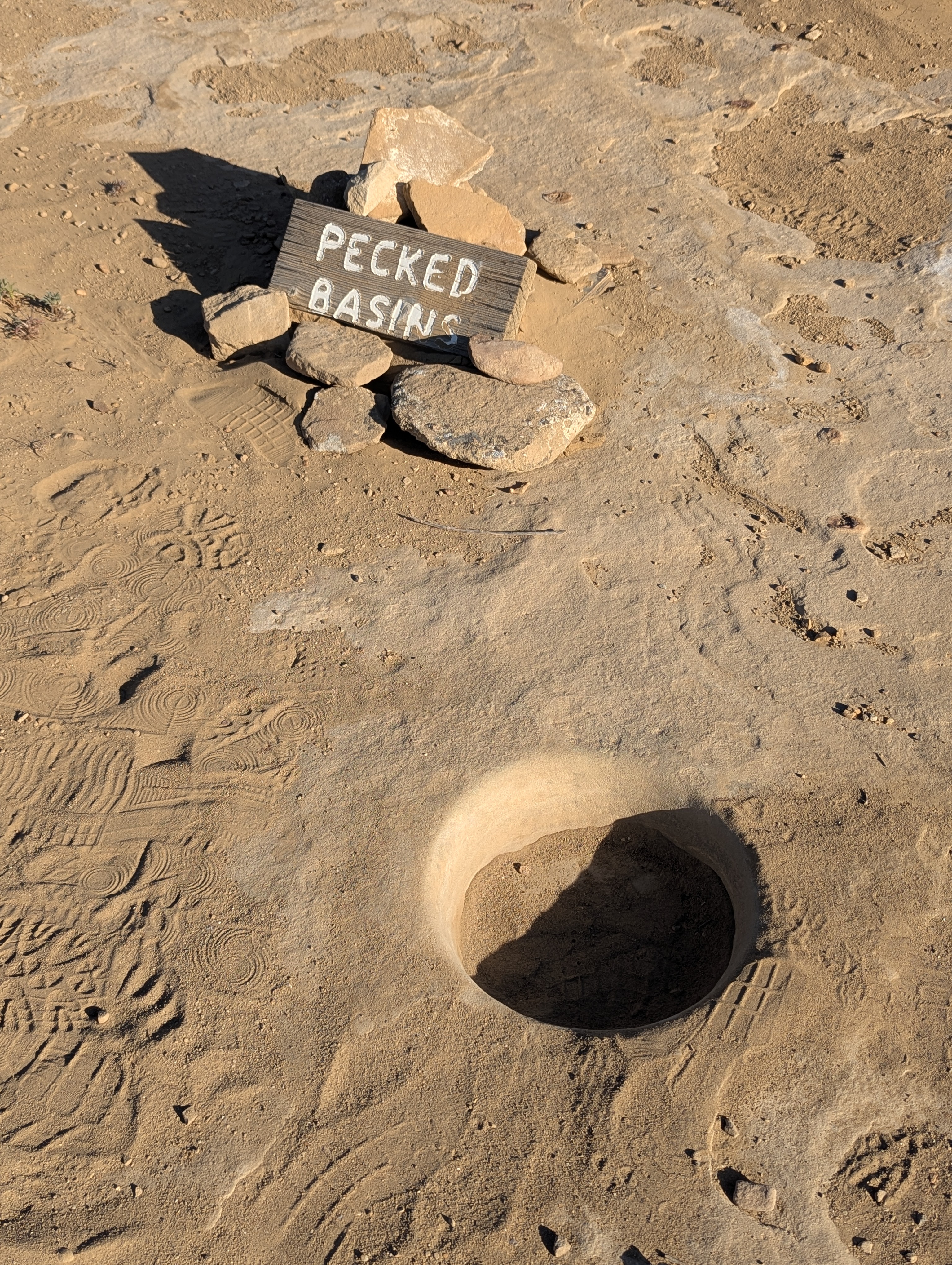
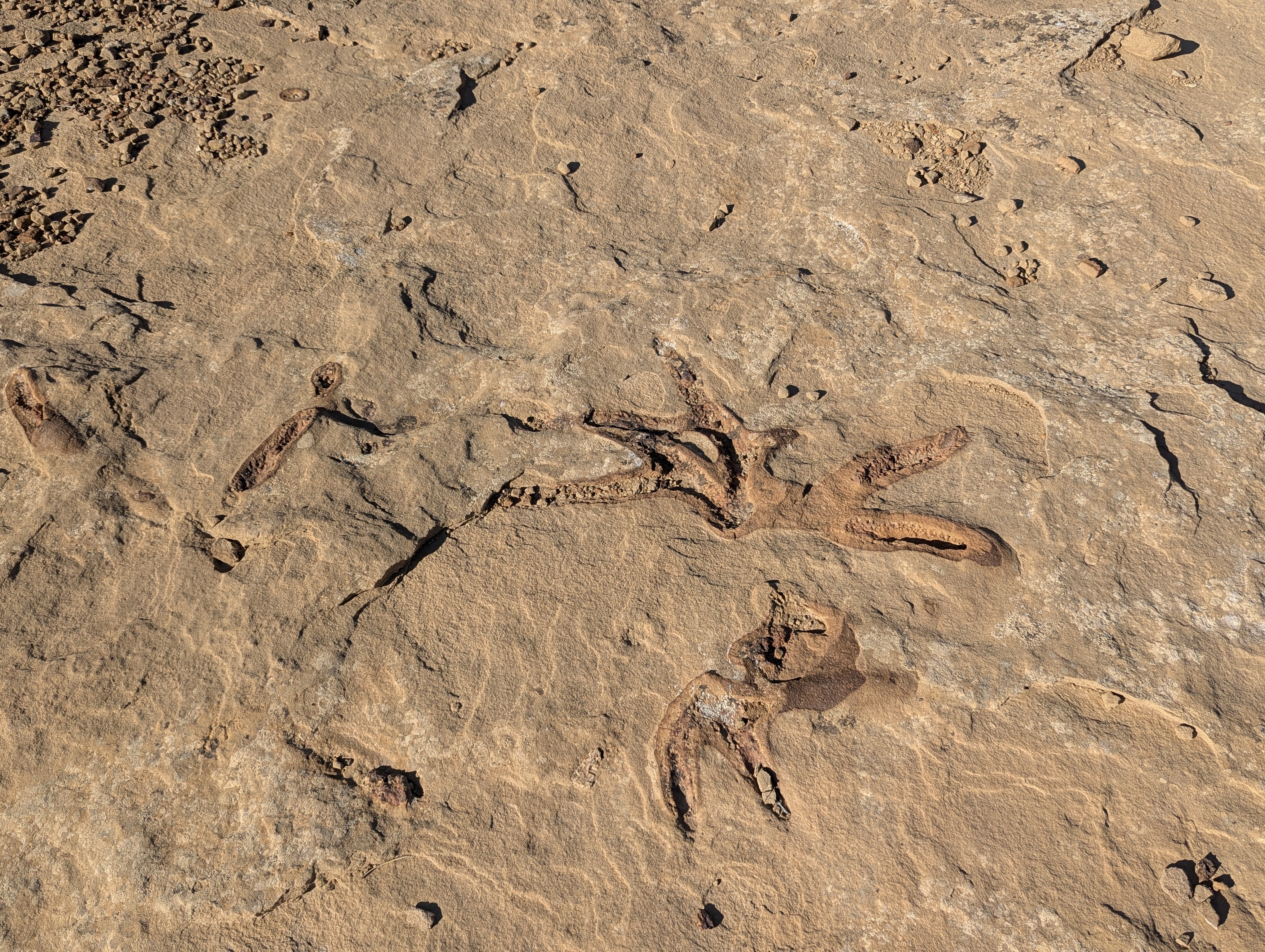
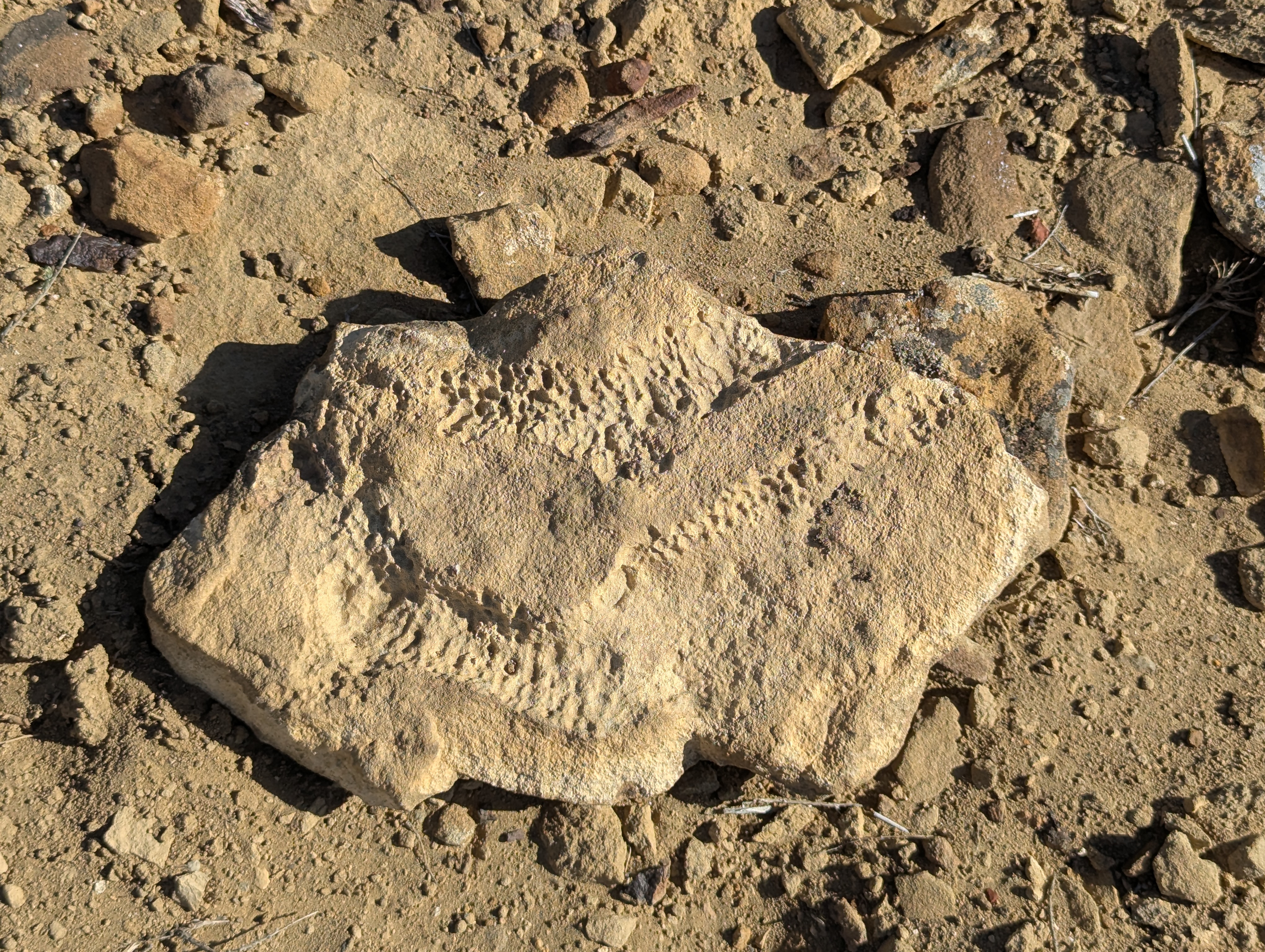
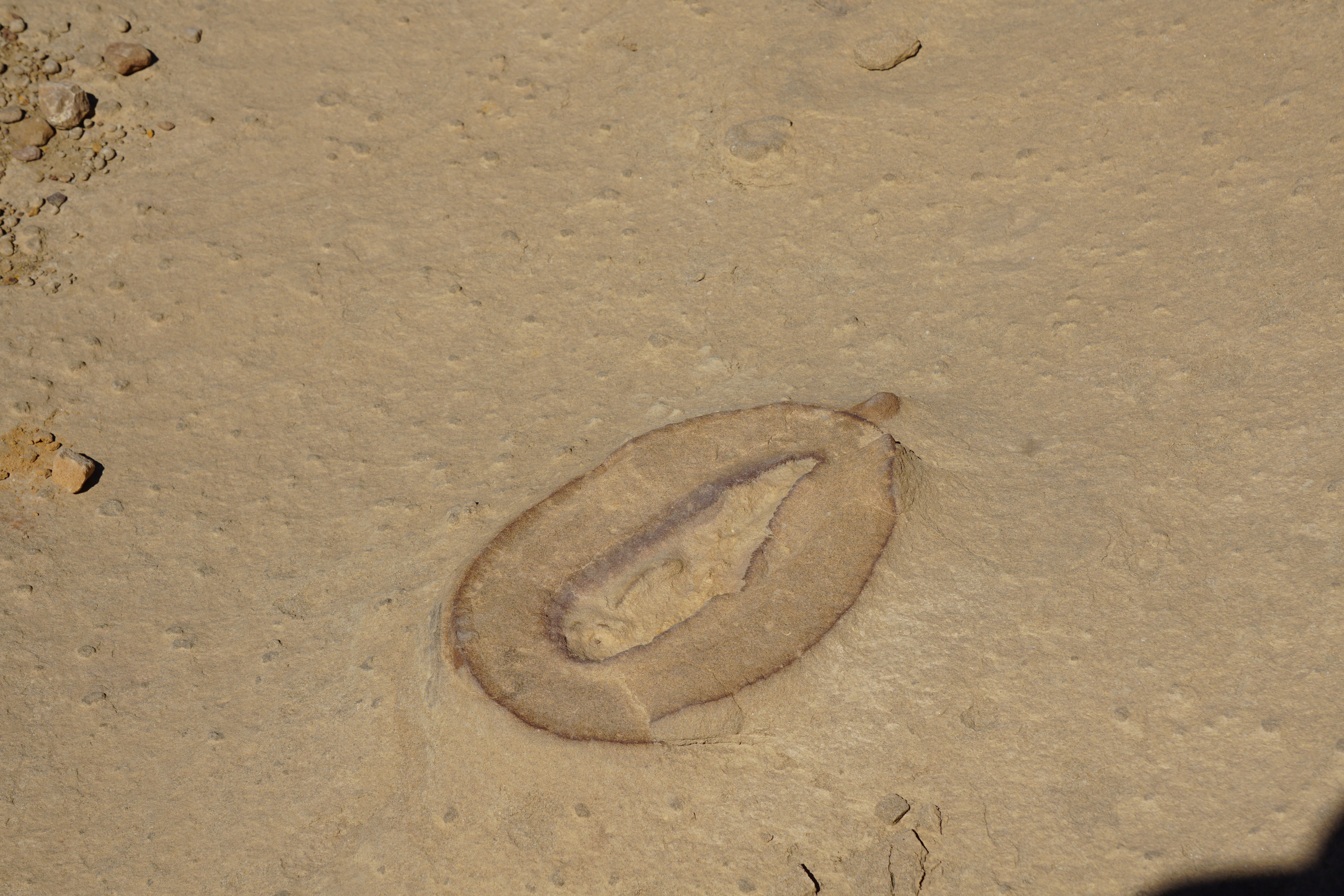
Some of the fossils and pottery chips left behind.
Petroglyphs
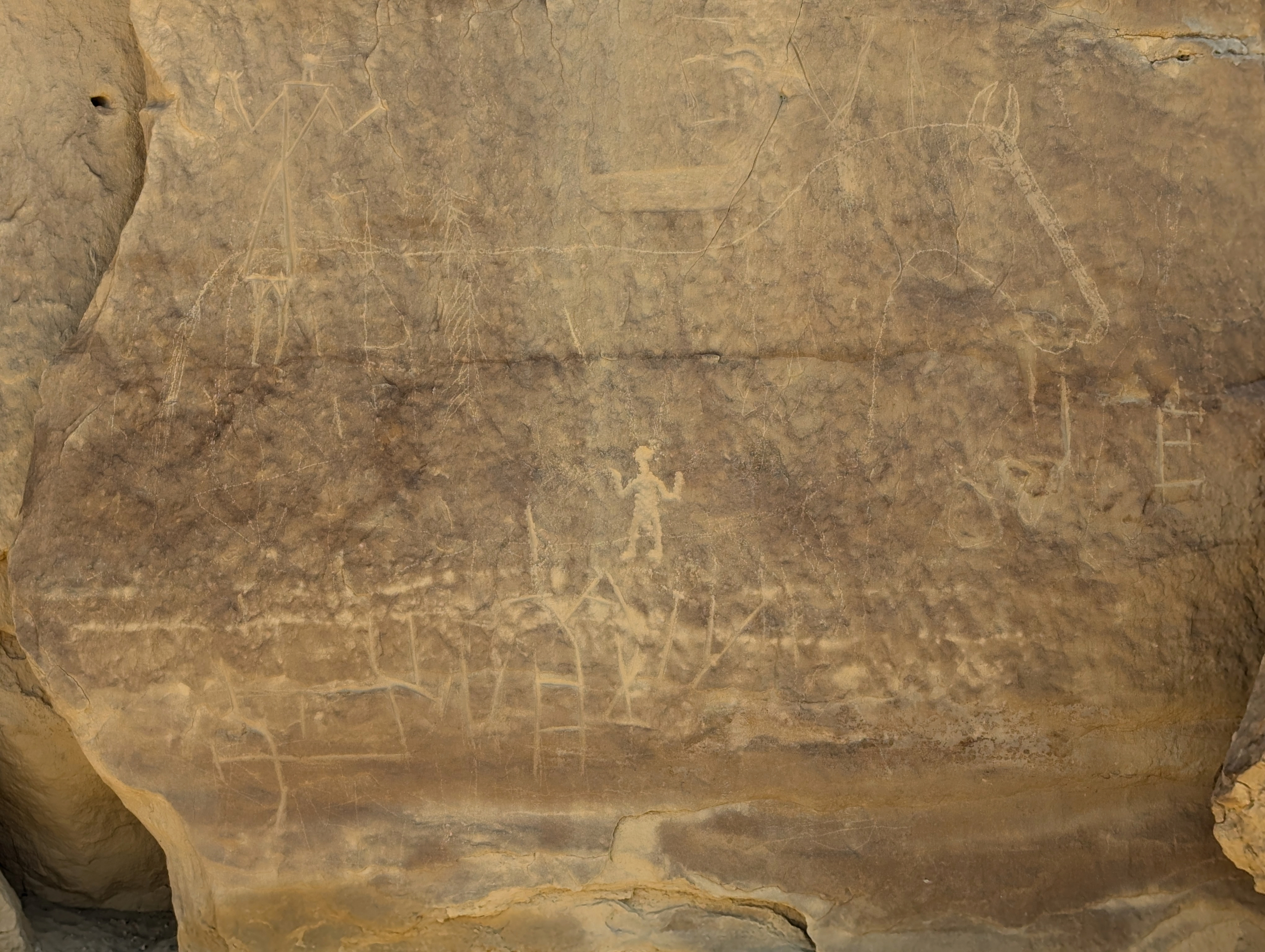
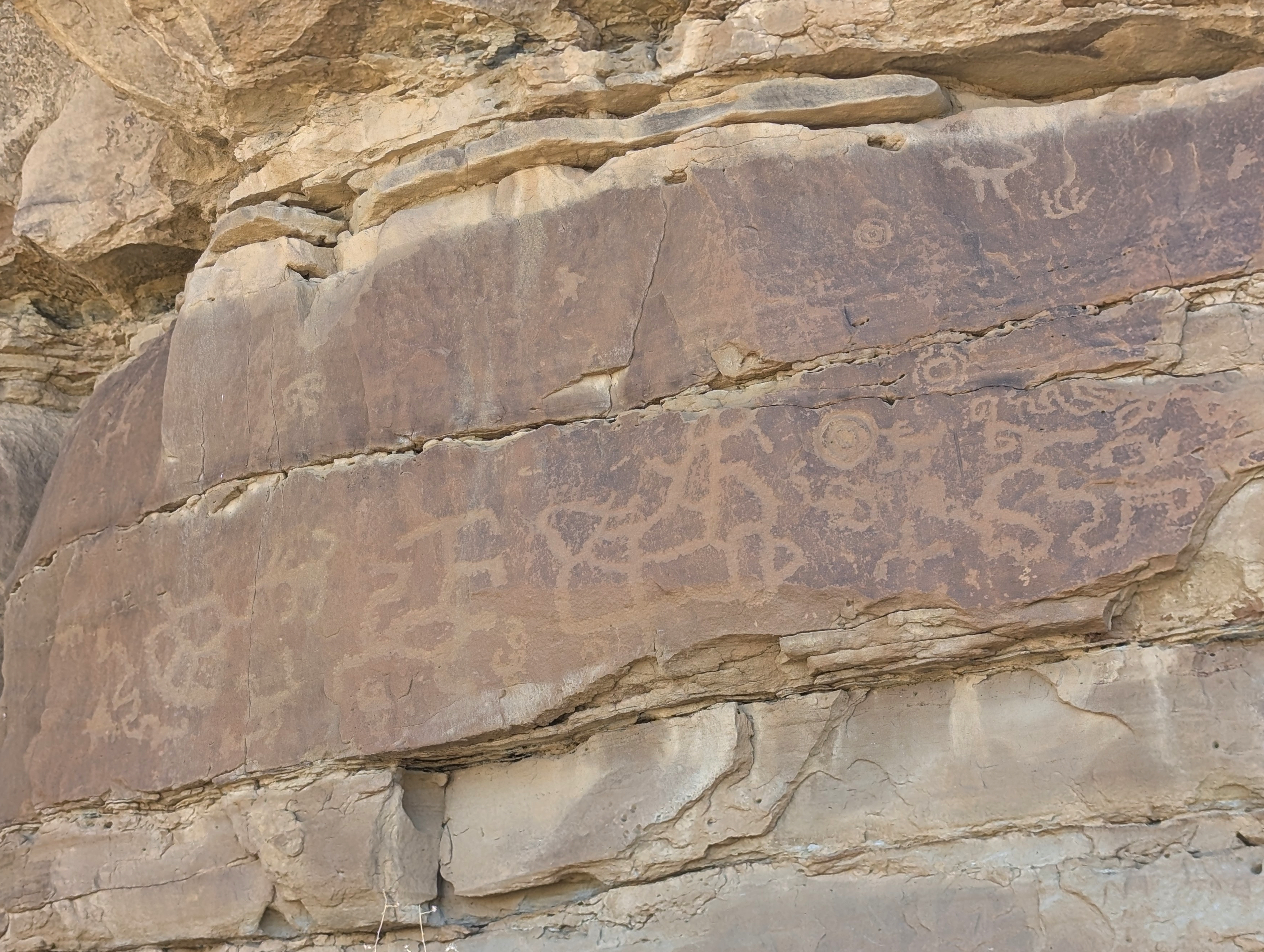
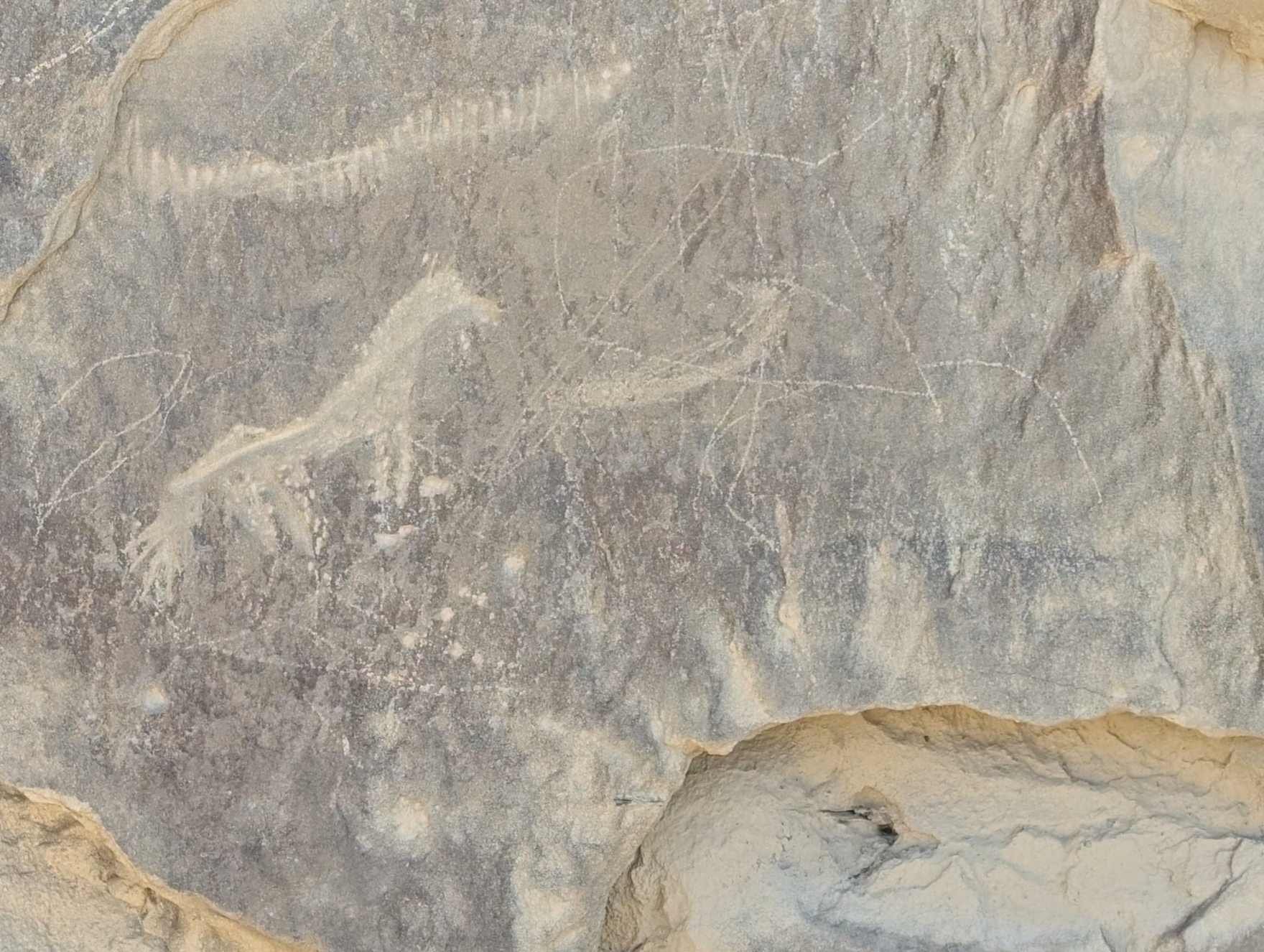
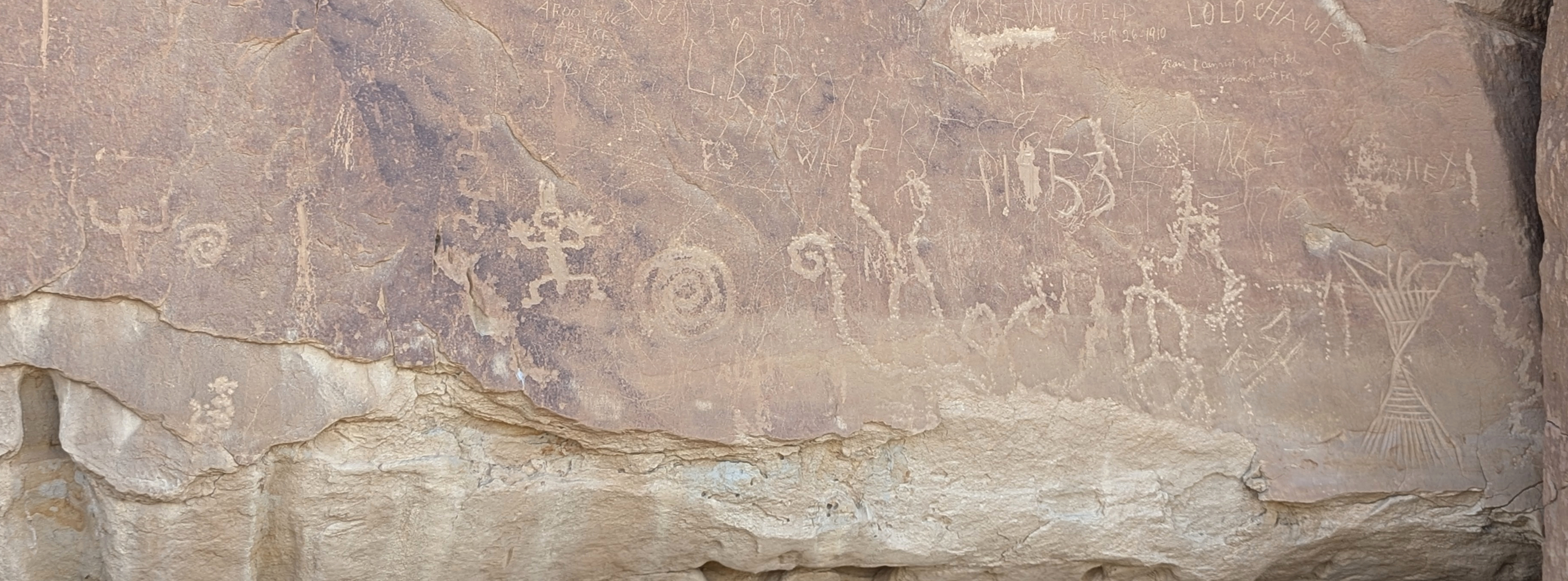
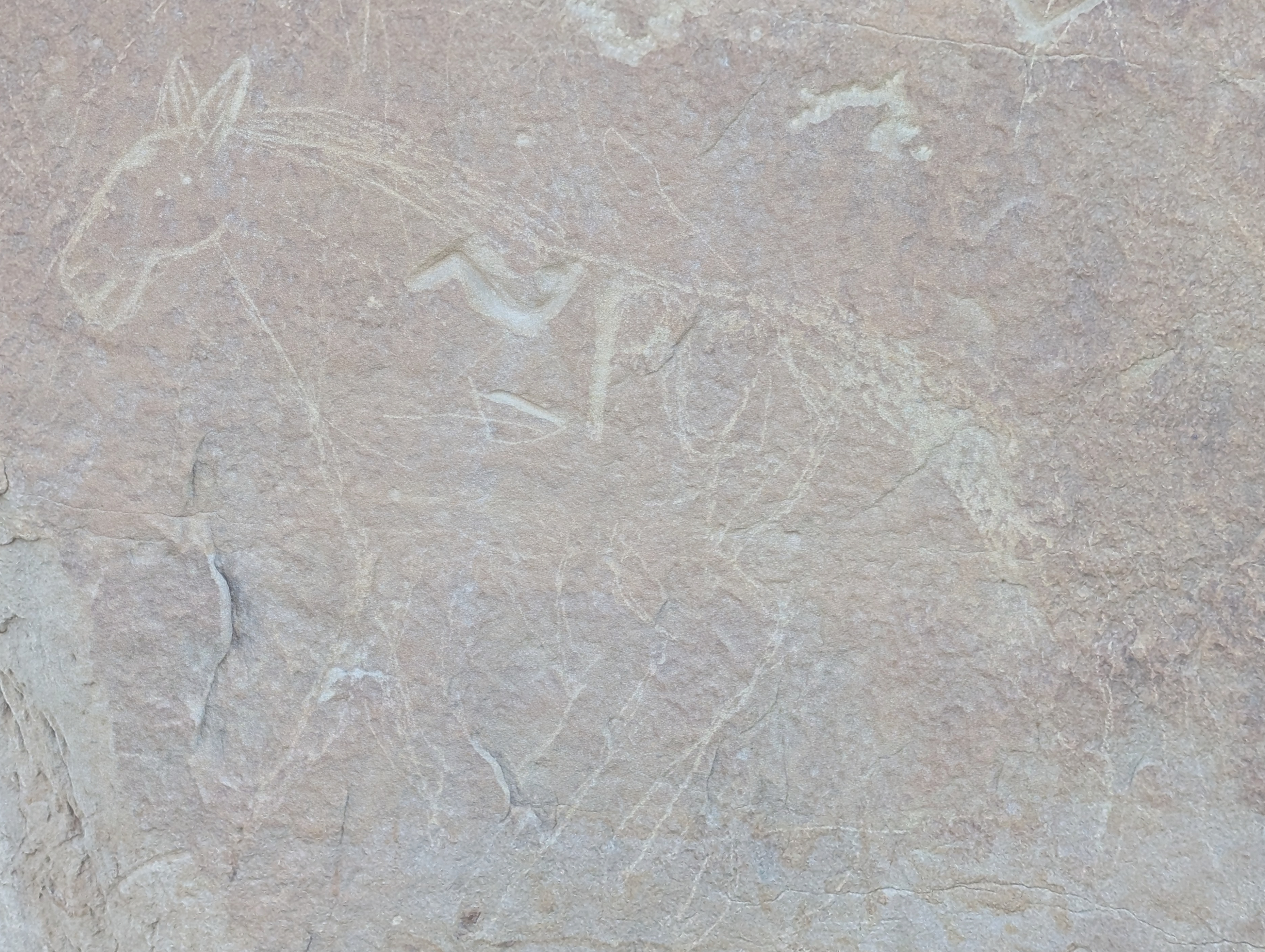
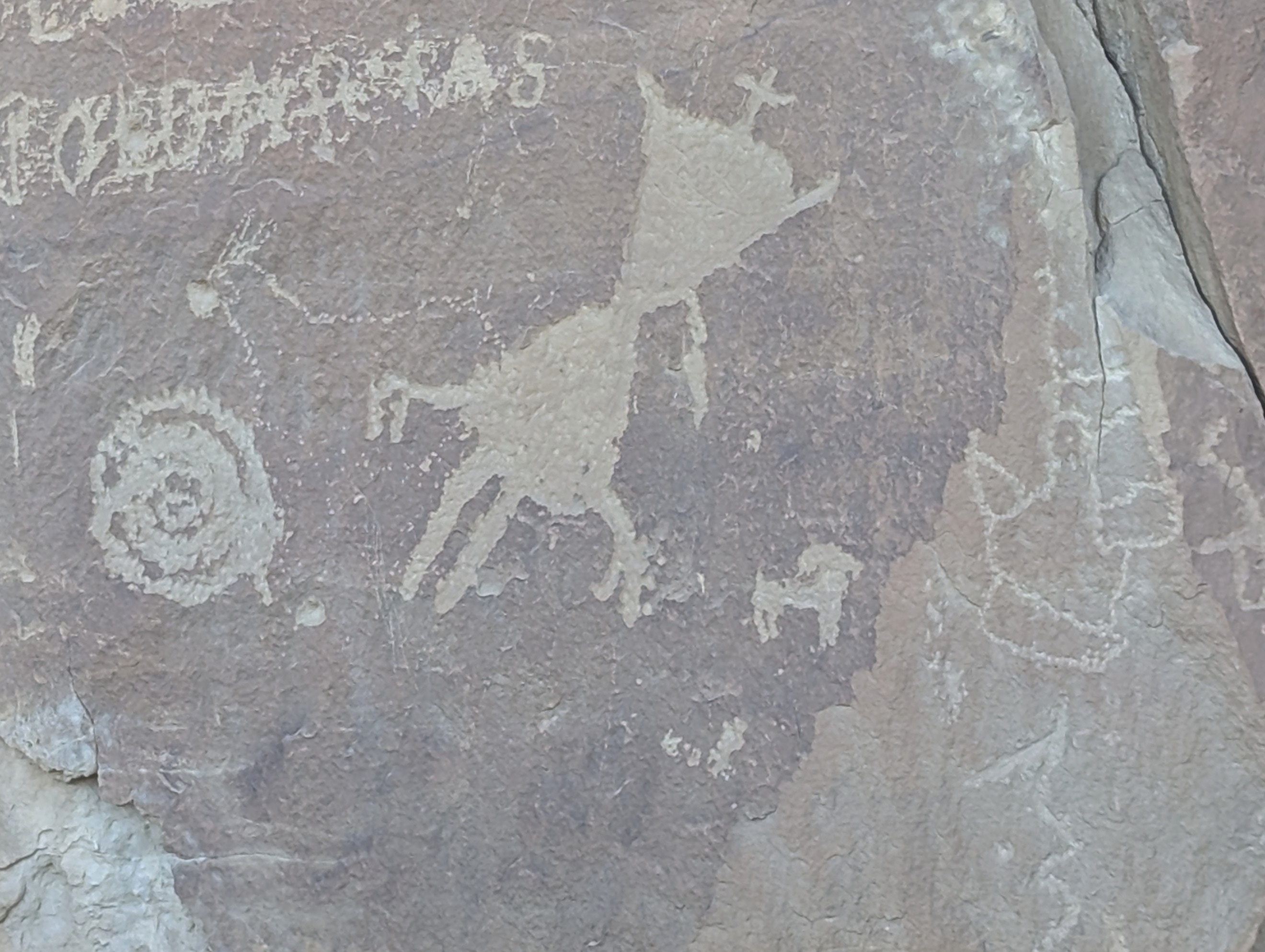
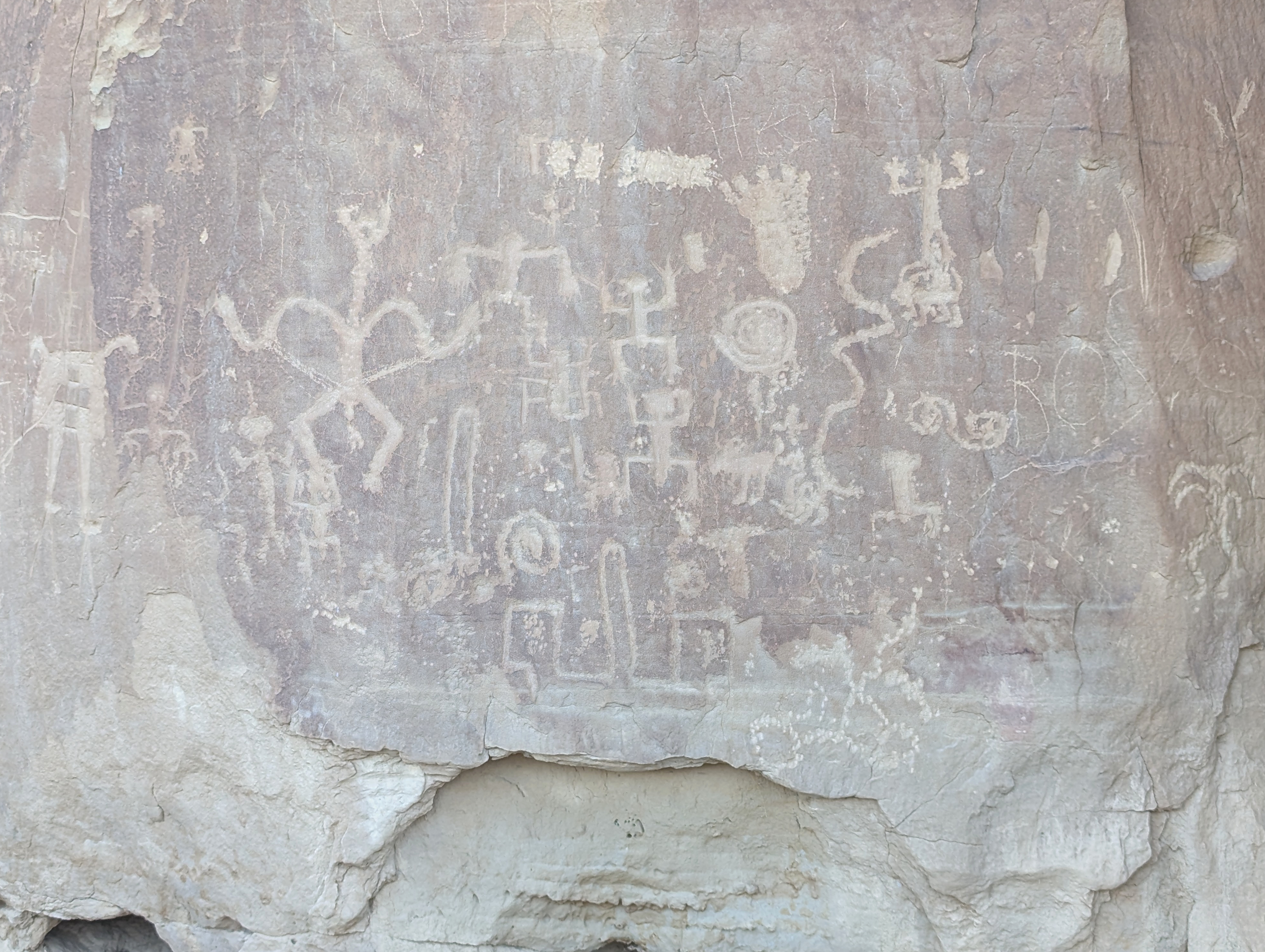
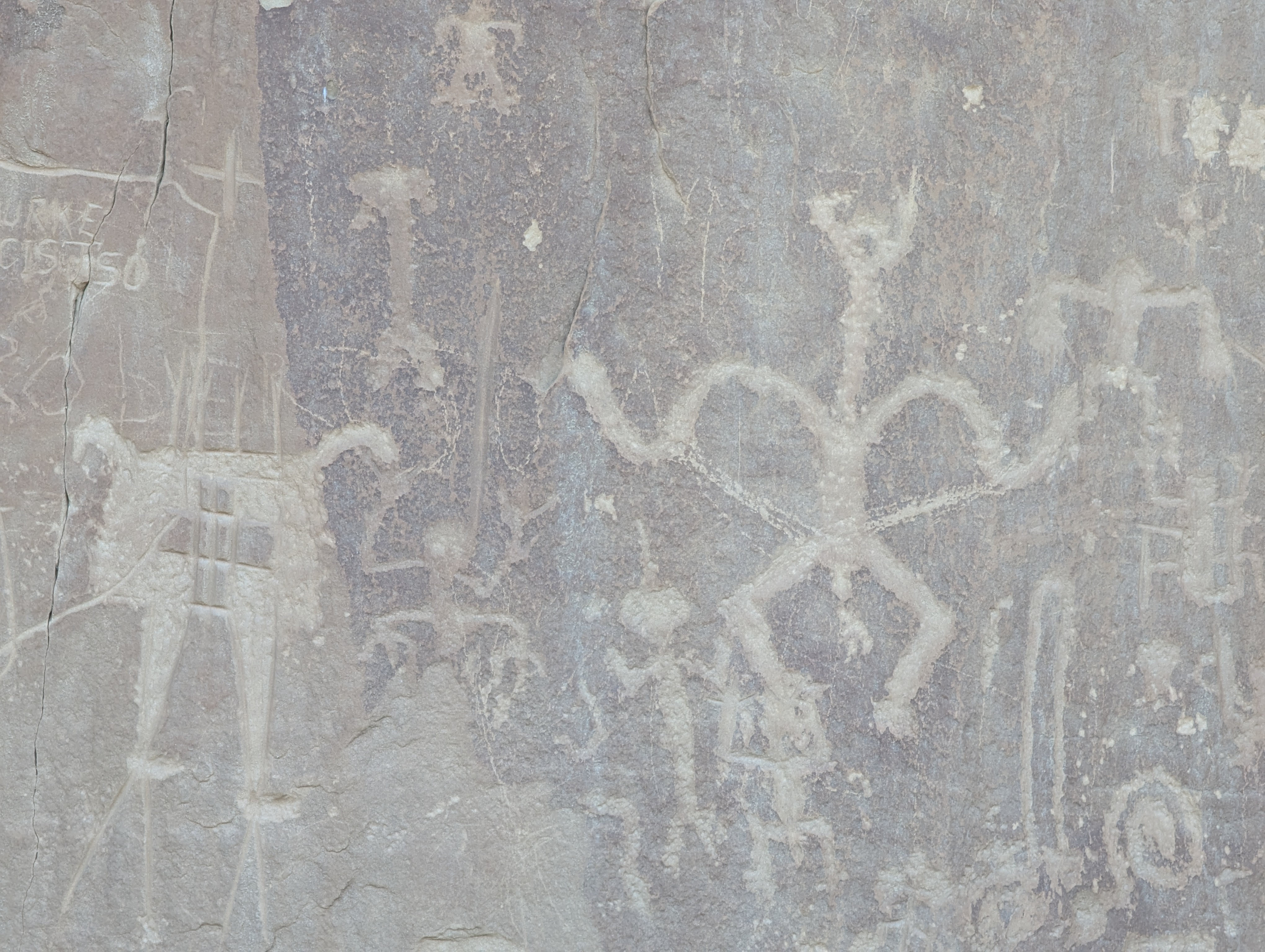
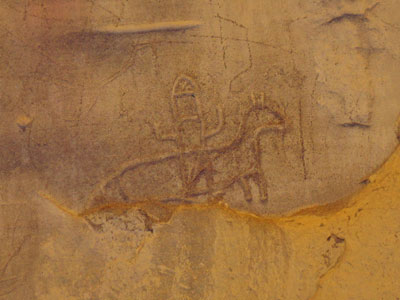
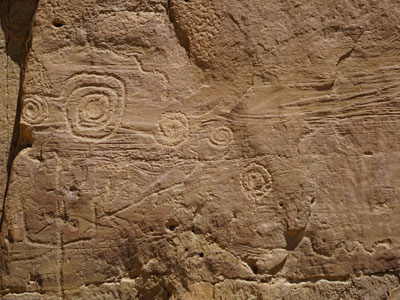
The Puebloans loved their horses as evidenced in these petroglyphs. You might miss the outline of a horse on the first picture unless you look closely.
One Last Thing
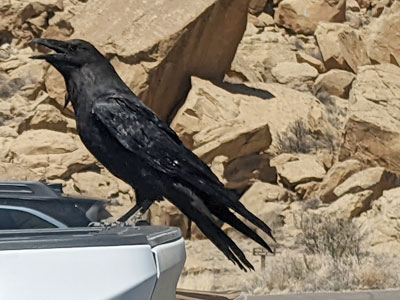
I always look for a Raven when we are hiking. Ravens are good luck and I always feel welcomed when I see or hear one.
This is a new version of an older post on Chaco Culture National Historic Park. Somehow my pictures were quite blurry during the first post and after another recent visit to Chaco, I was inspired to completely rewrite the post with updated photos. Hopefully Chaco will be around for years to come so you can visit too!

 An Inspired Cook
5 thoughts on “Chaco Culture National Historic Park”
Pepper
Wow! Your photos of the ruins are amazing. I would love to visit there. 😊
LikeLike
NativeNM
Thank you! Chaco Canyon is one of the most historic sites you’ll find with numerous sections of ruins, it’s like a city with suburbs. I hope you get the chance to visit.
LikeLiked by 1 person
Pepper
Amazing! It has been added to my bucket list of places to get to. 😉
LikeLiked by 1 person
Karen
It is truly a special place and the petroglyphs are amazing.
LikeLiked by 1 person
NativeNM
It was only last week when we visited Chaco, every time we visit we discover something new and amazing.
LikeLiked by 1 person